Diastema
A space between adjacent teeth. The term often refers to the gap between the two upper central incisors.
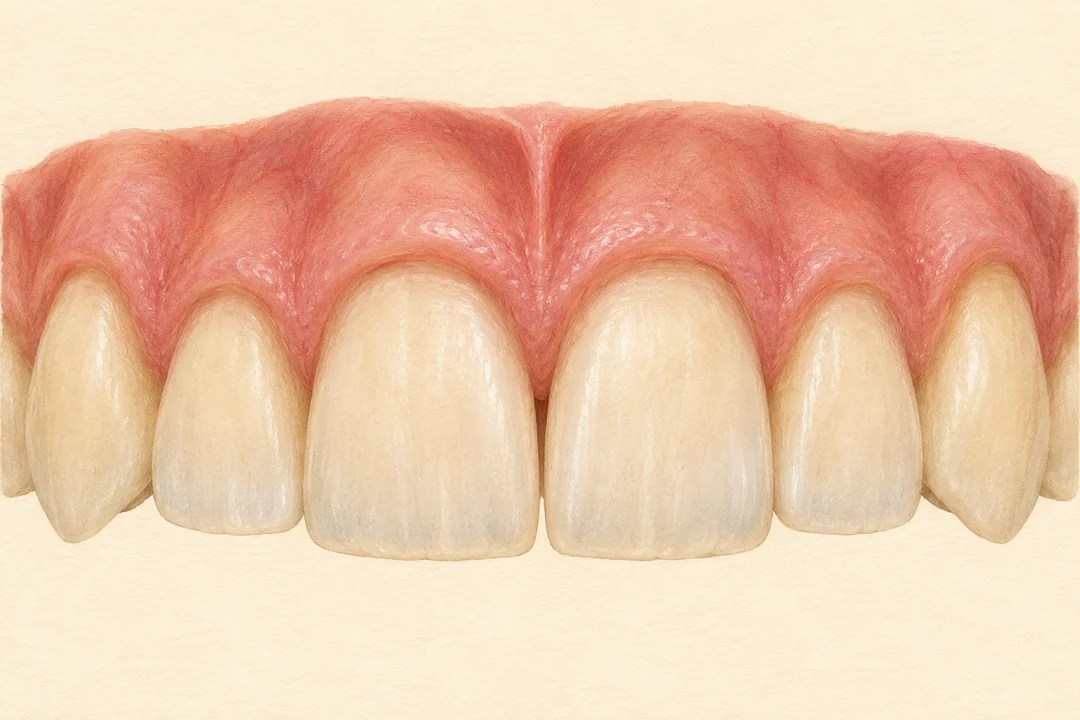
What is considered a diopter
The space between two central incisors is called a diastema. Other spaces may exist between adjacent teeth in the same or different arch. In children, the gap may change as permanent teeth erupt. In adults, the newly formed gap is assessed in relation to the condition of the gums and the position of the teeth.
Why is the cause determined before closure
For some patients, the importance lies in the size of the teeth and the amount of space in the arch. For others, it is necessary to rule out delayed eruption or the cause of misalignment. The presence of one space does not necessarily indicate crowding in another area. The orthodontist will clarify whether only tooth movement is required, whether the plan for their shape needs to be changed, and how to maintain the results.
What the timing of a gap can tell you
Tell the orthodontist if the gap has been there since the permanent front teeth came in, opened after braces came off, or recently grew wider. The timing gives them a starting point, such as checking tooth eruption, the retainer or gum health.
Related terms
Further reading
- Gap between the front teeth: when it is a diastema
- Types of Malocclusion: Bite Problems and How Common They Are