Orthodontics: Braces, Clear Aligners and Retainers
What to know before your first orthodontist visit and how to compare treatment options.
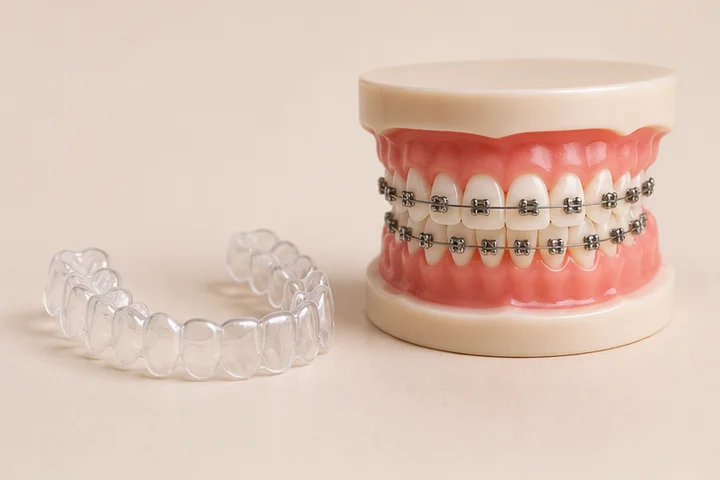
Orthodontic treatment moves teeth, and in children can guide jaw growth, so that the teeth fit together better. It uses fixed braces, removable clear aligners A thin, removable plastic tray worn over the teeth. A series of them moves the teeth in small, planned steps. or other appliances, and it finishes with a retainer A fixed wire or removable appliance worn after orthodontic treatment to keep the teeth from drifting back. to hold the result. The guides in this section are based on clinical guidelines, Cochrane reviews and other systematic reviews, and each one lists its sources.
Where to start
- For children, the American Association of Orthodontists advises a first check-up no later than age 7. When to see an orthodontist explains why, and early orthodontic treatment covers what trials show about treating some problems early.
- For adults, who make up about one in three orthodontic patients, orthodontics for adults covers gum health, timing and options.
- To make sense of a diagnosis, types of malocclusion explains Class I, II and III bites, crossbites, open bites and crowding.
Choosing and planning treatment
Types of braces compares metal, ceramic, lingual and self-ligating brackets, and clear aligners vs braces sums up what systematic reviews show about the two approaches. In clinical trials, comprehensive treatment with braces took about 20 months on average; how long orthodontic treatment takes explains what lengthens it and which ways of speeding it up have been tested.
During and after treatment
The section also covers daily cleaning with braces and the main side effects, from white spots on the enamel to root shortening. After treatment, teeth tend to drift back toward their old positions, and retainers and relapse explains what the evidence says about holding them in place. Only an orthodontist who examines you can say which option suits your bite.
Articles
Basics
-
Early Orthodontic Treatment for Children: When It Helps
What Cochrane reviews show about two-phase treatment for protruding teeth, underbites, crossbites and thumb sucking, and why it is not right for every child.
-
Types of Malocclusion: Bite Problems and How Common They Are
Class I, II and III bites, crossbite, open bite, deep bite and crowding explained, with prevalence figures from a US survey and a review of 53 studies.
-
Orthodontics for Adults: Gum Health, Timing and Options
The AAO says one in three orthodontic patients is an adult. How adult treatment differs: gum health, treatment time, aligners versus braces and retainers.
-
When to See an Orthodontist: The Age 7 Check-Up
The AAO advises a first orthodontic check-up no later than age 7. What the visit involves, signs to go sooner and why some children can still wait.
Clear aligners
-
Clear Aligners vs Braces: What the Research Shows
Reviews find braces give a more precise bite on average, most clearly when teeth are extracted, with closer results otherwise. Why DIY aligners are risky.
Braces
-
How Long Does Orthodontic Treatment Take? What Studies Show
Treatment with braces averaged about 20 months in clinical trials. What makes it longer, and whether vibration, lasers or minor surgery really speed it up.
-
Types of Braces: Metal, Ceramic, Lingual and Self-Ligating
How metal, ceramic, lingual and self-ligating braces differ, and what systematic reviews show about speed, comfort and hygiene: few differences hold up.
Retainers
-
Retainers After Braces: Why Teeth Shift and How Long to Wear Them
Teeth tend to drift after braces or aligners. What a Cochrane review says about fixed and removable retainers, and why long-term wear is advised.
Care and risks
-
How to Clean Your Teeth With Braces: A Daily Routine
A step-by-step cleaning routine for braces based on AAO guidance, what to eat and drink, and what trials show about electric brushes and fluoride.
-
Risks of Orthodontic Treatment: Enamel, Roots, Gums and Pain
White spots on enamel, root shortening, small gum changes and soreness are the main side effects of braces. How common they are and what lowers the risk.
Team
- Editorial team
Author, Editor