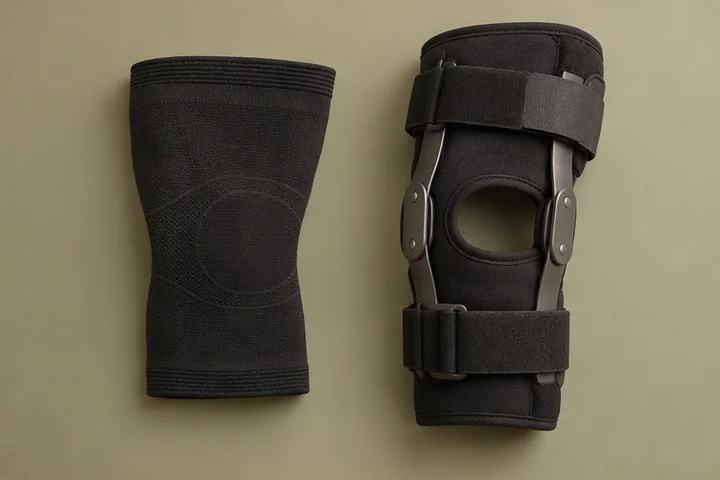
A wrist splint, hinged knee brace, and ankle-foot orthosis are examples. Different designs provide different degrees of support and allow different ranges of movement.
Why designs differ
A soft support wraps the joint and provides compression. A hinged design can allow a selected range of bending, while a rigid splint holds a body part in a set position. The design follows the clinical goal.
During fitting, the clinician checks the straps, permitted movement and pressure points. Increasing numbness, tightness or skin damage is a reason to stop the fitting and ask for an adjustment.
A shoe insert changes support under the foot, while an ankle-foot orthosis also surrounds the ankle. They offer different amounts of support and movement. Ask what fit and movement the prescribed device should allow.
Source — AAOS.