Orthopedics · Insoles
Flat Feet in Adults and When to Get an Exam
This article is for general information and does not replace advice from a doctor. Medical disclaimer
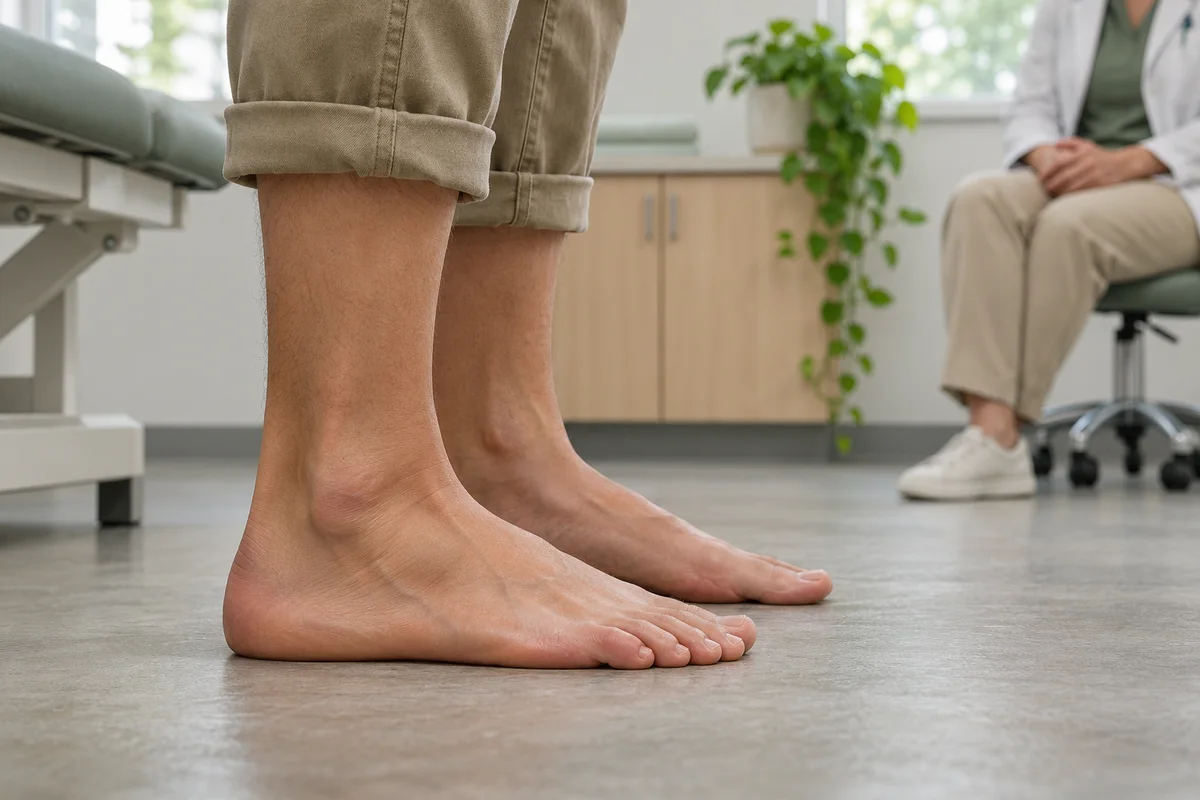
If both feet have had low arches since childhood and you can walk comfortably, you usually need no treatment. A new change, especially in one foot, deserves an exam if it comes with pain or makes your usual activities harder.
Changes to watch for
With acquired flatfoot A foot shape in which the inner arch sits low or touches the ground while standing. , the arch may flatten gradually, the heel may tilt outward, and the front of the foot may begin to point out. Rising onto the toes of the affected foot can become harder. The first symptom can be pain or swelling on the inner side of the ankle. As the condition progresses, pain may also develop on the outside.
The posterior tibial tendon and nearby ligaments help support the arch. A clinician checks how the foot moves and takes weight to learn which structures may be involved.
What happens at an exam
A foot and ankle orthopedist or podiatrist can compare your feet while you stand, check how flexible each foot is, and see how the heel moves during a single-leg heel raise. The location of the pain also helps guide the exam.
When bone alignment needs a closer look, the clinician may order standing X-rays. MRI is used selectively, for example to examine a tendon or ligament.
When an insert or brace might help
An orthotic insole A shoe insert shaped to support the arch and heel and change how load is spread across the foot when you stand and walk. supports the foot inside a shoe. An ankle-foot orthosis An external device that supports a body part or guides or limits its movement. can provide support around the ankle and limit some movement. Which one is appropriate depends on the symptoms and flexibility of the foot. Check for room in your usual shoes and how stable the support feels when you walk. See our comparison of custom and prefabricated insoles and guide to checking shoe fit.
Get an exam if you notice a new change in one foot, pain, stiffness, or weakness. Bring a pair of shoes you wear regularly, and explain when you first noticed the change and which activities became harder.
Frequently asked questions
Do painless low arches need treatment?
If both feet have had low arches for years and you walk comfortably, treatment is usually unnecessary.
Can inserts rebuild my arch?
Inserts can support the foot inside a shoe and may ease symptoms. If the shape of the foot is changing, an exam can help determine what kind of support makes sense.
Sources
- Flat feet. NHS
- Progressive Collapsing Foot Deformity. American Academy of Orthopaedic Surgeons
- Adult Acquired Flatfoot Deformity: A Narrative Review about Imaging Findings. Diagnostics, 2023
- Heel Spurs and Heel Pain
What a heel spur looks like on an X-ray, which symptoms suggest plantar fasciitis or other causes, and when to get an exam. - Custom vs prefabricated insoles: how to compare
Compare fitting, adjustments and total cost. See what research found when custom and prefabricated foot orthoses were compared for heel pain. - How to choose orthotic insoles: fit and types
Compare cushioning inserts, prefabricated orthoses and custom devices. Learn what to check inside your shoes and what to ask at a fitting. - Orthotic insoles and shoes: how to check the fit
Check heel depth, toe space and insole movement before altering an orthosis. Learn what to bring to a fitting or follow-up. - Insoles for Plantar Fasciitis: What the Evidence Shows
In trials, insoles alone did little for plantar fasciitis pain. Guidelines favor stretching, taping and night splints, with insoles only as an add-on. - Beginner yoga at home: choosing your first poses
Try mountain pose at home, choose between a chair and a mat, and learn what to look for in a beginner yoga class before you press play.