Orthopedics · Orthoses
Types of knee braces: support, fit and selection
This article is for general information and does not replace advice from a doctor. Medical disclaimer
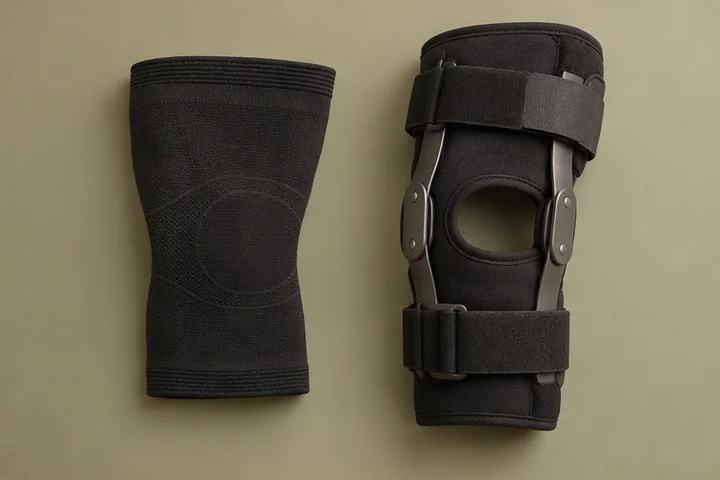
- Sleeve a feeling of support
- Hinges assistance with controlling movement
- Unloader shifts load away from one area
A knee brace can provide a feeling of support, assist stability or shift load away from one area. Start with the activity that is difficult and why, such as pain on stairs or a knee that feels unreliable.
Compare the main designs
| Design | What to check |
|---|---|
| Soft sleeve | Whether it stays in place and lies flat when the knee bends |
| Support with hinges or side stays | Which movement the design helps control and where the side components sit |
| Unloader brace | Which side needs load reduction and who will adjust the brace |
The American Academy of Orthopaedic Surgeons says bracing can be considered for pain and function in knee osteoarthritis. Fit and the area affected matter. A sleeve and an unloader are built for different purposes even if their size ranges are similar.
Check the fit
Follow the measurements given for that model. Walk and sit during a fitting when appropriate, and ask whether the support can be adjusted if it moves or rubs. New pain, skin irritation or numbness deserves a fit check. After a new injury with major swelling, severe pain or an inability to bear weight, seek evaluation first.
See the guide to knee braces for osteoarthritis for condition-specific evidence.
Sources
- Bunion Splints and Toe Spacers: What They Can and Cannot Do
Splints, toe spacers and insoles may ease bunion pain, but none has been shown to permanently correct a bunion. What studies found and when surgery comes up. - Wrist Splints for Carpal Tunnel Syndrome: What Studies Show
A night wrist splint is a common first step for carpal tunnel syndrome. The latest Cochrane review finds uncertain benefits and only temporary side effects. - Beginner yoga at home: choosing your first poses
Try mountain pose at home, choose between a chair and a mat, and learn what to look for in a beginner yoga class before you press play. - Chair yoga for beginners: three poses you can try seated
Set up a stable chair and explore seated mountain, a small seated cat movement and a side bend, with ways to adjust the range. - Downward-facing dog: how to try a supported chair variation
How downward dog works, how a higher hand support changes the pose, and what to consider if your wrists hurt or you have glaucoma. - Tree pose for beginners: finding balance beside a wall
Where to place your foot in tree pose, how to use a wall, and how to come out of the pose if you start to wobble.