Strabismus
A misalignment of the eyes in which one eye deviates from the target the other eye is viewing.
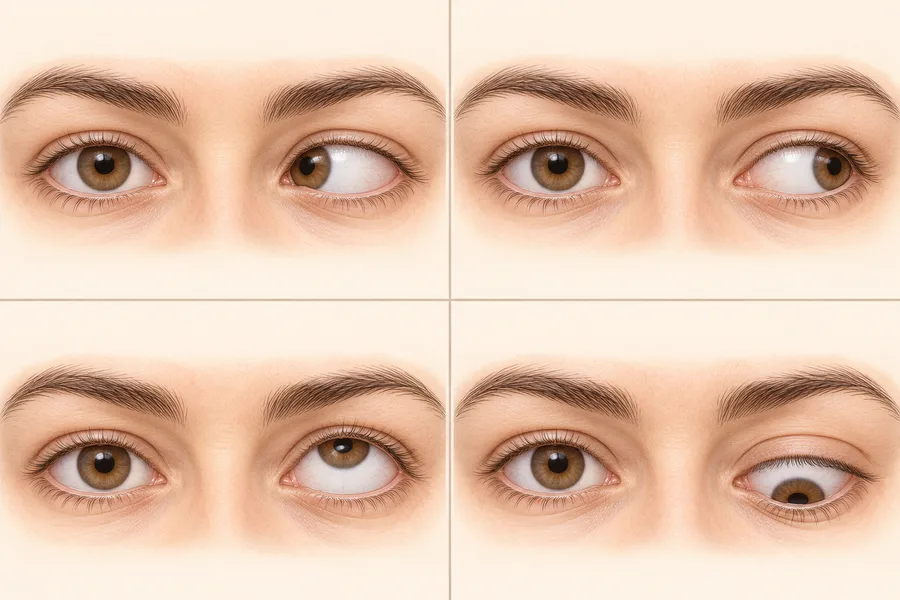
The eye can turn inward, outward, upward, or downward. The deviation can be constant or intermittent. An exam considers vision in each eye, eye movements, and how the eyes work together.
Why the examination covers both eyes
The direction of the turn distinguishes esotropia, exotropia and vertical strabismus. A cover test can show whether an eye moves to regain fixation. Measurements may differ at near and far distances.
In children, testing the vision of each eye can detect amblyopia. A sudden eye turn, particularly with double vision, needs urgent assessment.
It helps to describe when and in which direction the eye turns. An eye may drift when looking at a distant target but seem straight during reading. These observations complement the measurements taken in clinic.
Source — AAPOS.