Orthodontics · Braces
Orthodontic miniscrews: temporary anchors for tooth movement
This article is for general information and does not replace advice from a doctor. Medical disclaimer
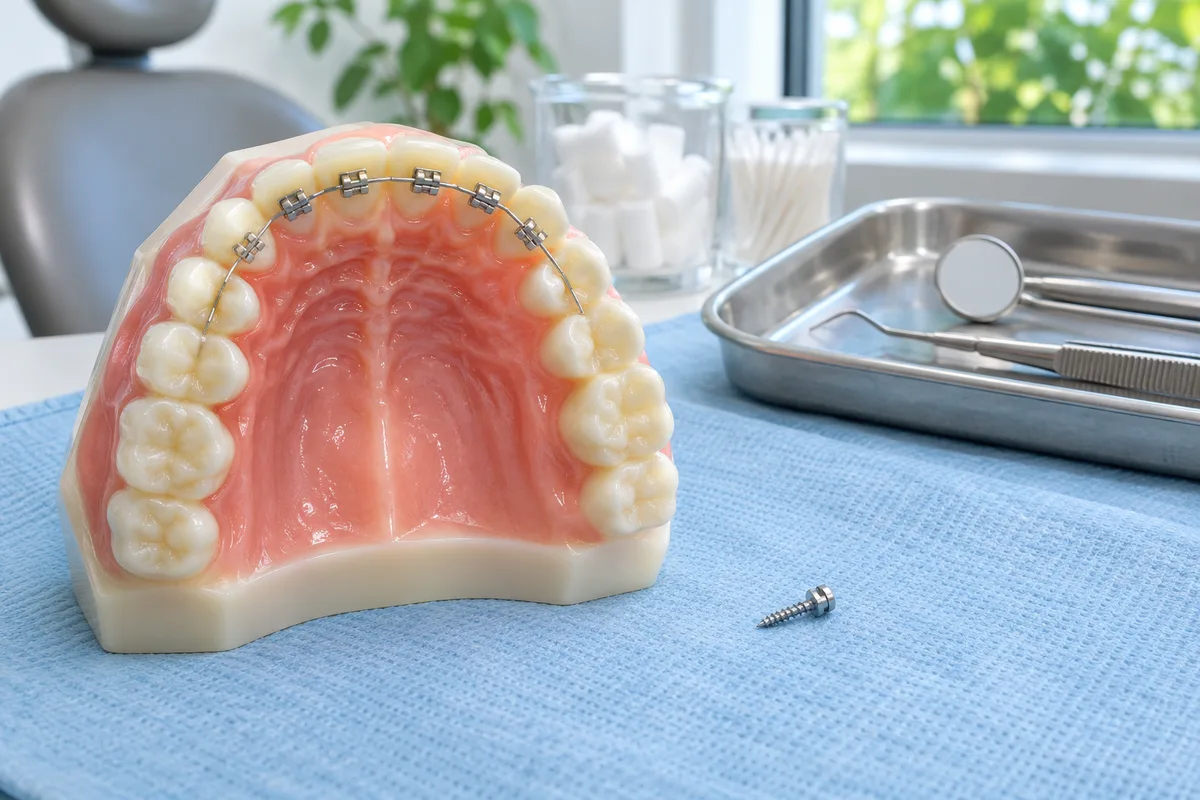
A miniscrew is a temporary anchor secured in bone. The orthodontist can use it to move selected teeth while limiting unwanted movement of other teeth. It is usually removed when that stage of treatment is complete.
When it may help
An anchor can be useful when relying on other teeth would move them in an unwanted direction. The team assesses the intended movement and the space and tissues at the proposed site. Ask them to point out which teeth should move.
What can go wrong
A miniscrew can become loose and may need replacing or a change of plan. Review findings on failure rates vary with placement and other factors. Tell the office about looseness, increasing pain, or inflamed tissue.
Planning the visits
Ask who will place and remove the screw, how the team wants you to clean around it, and when it will be checked. Ask whether replacing or relocating it would change the fees or schedule.
Frequently asked questions
Does a miniscrew stay in after braces?
Usually it is removed once it no longer needs to act as an anchor.
Sources
- Mini-screws. British Orthodontic Society
- Miniscrews failure rate in orthodontics: systematic review and meta-analysis. European journal of orthodontics
- An Umbrella Review of the Effectiveness of Temporary Anchorage Devices and the Factors That Contribute to Their Success or Failure. The journal of evidence-based dental practice
- Braces on dental crowns: what the orthodontist checks
How crown material affects bonding and why a crown on a natural tooth is treated differently from an implant crown. - Ceramic braces: visibility, care and trade-offs
See which parts of ceramic braces stay visible, what affects bracket choice, and how to compare ceramic and metal options. - Getting Braces Removed and What Happens Next
What happens when braces come off, what removal can feel like, and what to ask before you leave with a retention plan. - How Much Do Braces Cost in the U.S.?
Published U.S. braces fees and what to check in a quote, from records and adjustments to removal and retainers. - Lingual braces: how they work and what to expect
Learn how behind-the-teeth braces affect speech and cleaning, and what to find out before choosing a lingual appliance. - Rubber bands for braces: what orthodontic elastics do
Learn how interarch elastics differ from elastic ties, why your pattern is individual, and what to ask if you run out or a hook breaks.