Orthodontics · Braces
Lingual braces: how they work and what to expect
This article is for general information and does not replace advice from a doctor. Medical disclaimer
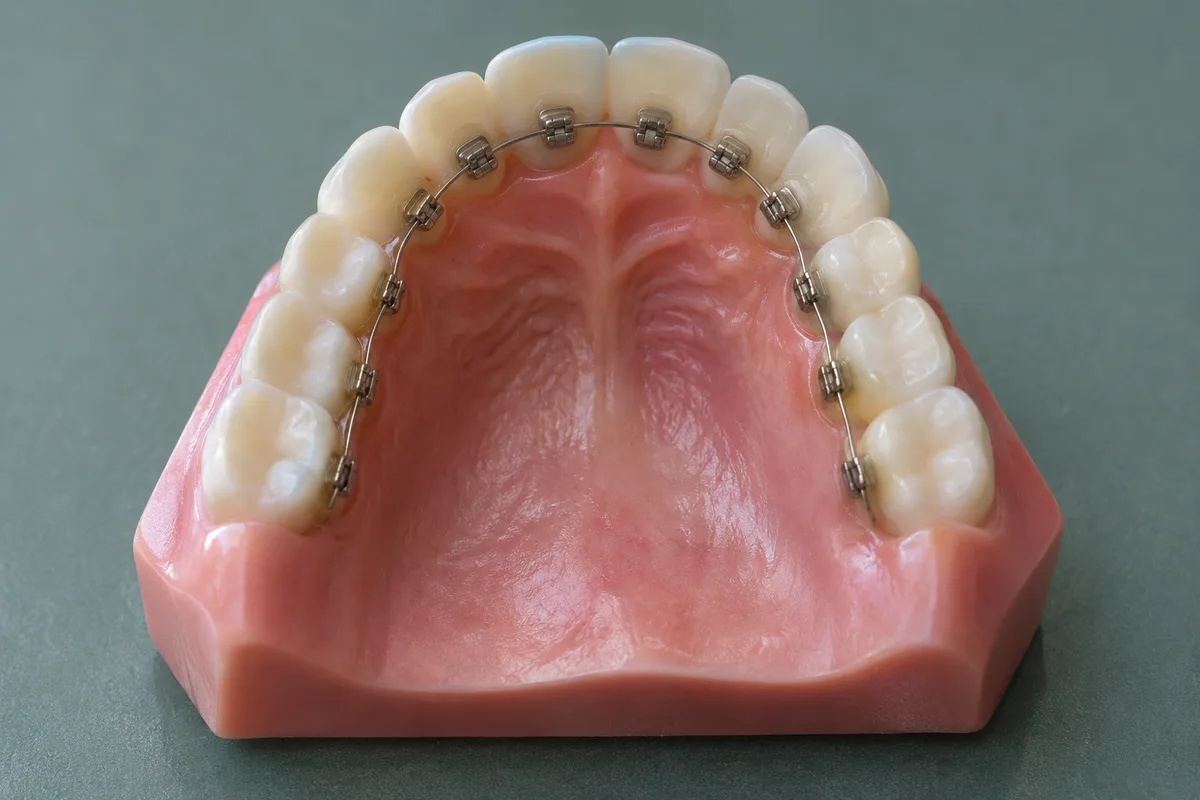
Lingual braces are bonded to the side of the teeth that faces the tongue. From the front the brackets are usually hidden. They still use a wire and stay in the mouth between appointments, like other fixed braces.
What feels different
The tongue brushes past the brackets during speech or swallowing. Some people notice tongue soreness or trouble saying particular sounds at first. Comparative studies have found more reports of these problems with lingual than with outside braces. How long adaptation takes varies from person to person.
The position of the brackets also makes it harder to look directly at the area you are cleaning. At the fitting, ask the team to show you the spots that need extra attention. Contact the office if one point of the appliance keeps injuring your tongue.
What to ask before you commit
Ask whether the teeth can make the planned movements with a lingual appliance and how the brackets will fit your bite. Find out what happens if one comes off. Some appliances use customized parts, so the office can explain how long repairs take and what the fees include. If you teach or speak for work, ask what to expect from speech changes.
Compare everyday trade-offs
Ceramic braces are bonded to the front, with less contrast against the enamel. Clear aligners can be removed. Compare cleaning, speech, visibility, and repair arrangements alongside the clinical plan your orthodontist recommends.
Frequently asked questions
Can people see lingual braces when you talk?
The brackets are usually hard to see from the front. Speech may change temporarily while your tongue adjusts.
Can lingual braces go on just one set of teeth?
A one-arch appliance may be an option in some cases. Your orthodontist has to check how the upper and lower teeth will fit together.
Sources
- Lingual Braces. British Orthodontic Society
- Comparison of adverse effects between lingual and labial orthodontic treatment. The Angle Orthodontist
- Ceramic braces: visibility, care and trade-offs
See which parts of ceramic braces stay visible, what affects bracket choice, and how to compare ceramic and metal options. - Getting Braces Removed and What Happens Next
What happens when braces come off, what removal can feel like, and what to ask before you leave with a retention plan. - How Much Do Braces Cost in the U.S.?
Published U.S. braces fees and what to check in a quote, from records and adjustments to removal and retainers. - Rubber bands for braces: what orthodontic elastics do
Learn how interarch elastics differ from elastic ties, why your pattern is individual, and what to ask if you run out or a hook breaks. - How Long Does Orthodontic Treatment Take? What Studies Show
Treatment with braces averaged about 20 months in clinical trials. What makes it longer, and whether vibration, lasers or minor surgery really speed it up. - Types of Braces: Metal, Ceramic, Lingual and Self-Ligating
How metal, ceramic, lingual and self-ligating braces differ, and what systematic reviews show about speed, comfort and hygiene: few differences hold up.