Orthopedics · Movement and balance
Downward-facing dog: how to try a supported chair variation
This article is for general information and does not replace advice from a doctor. Medical disclaimer
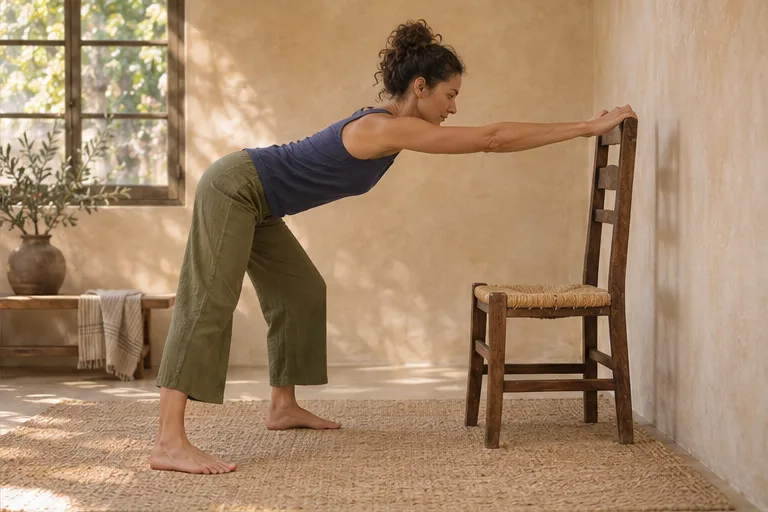
- Mat hands and feet share the same surface
- Chair higher hands allow a shallower hinge
- Exit step toward the support before standing upright
In downward-facing dog, or Adho Mukha Svanasana, the hands and feet support the body while the hips travel up and back. The floor version resembles an upside-down V from the side. A chair lets you explore the hip hinge without first getting down onto a mat.
Set up the chair version
Place a sturdy chair without wheels against a wall. Check that it will stay put and will not tip when you press on it. Put your hands about shoulder-width apart on the back of the chair. Take small steps back and let the hips move away from the hands. Keep your knees soft and your head in line with your back. Choose a distance at which you can breathe comfortably. To finish, step in before coming upright.
Do your heels have to touch the floor?
Heel position in the mat version varies. More useful cues are whether the weight feels manageable and whether you can leave the pose easily. If the backs of your legs feel too tight, bend the knees a little or take a shallower angle. If supporting weight through your hands hurts even with a chair, try mountain pose with your arms at your sides.
What if you have glaucoma?
In a small study of four head-down positions, eye pressure rose temporarily during the poses in participants with and without glaucoma. The study measured short-term changes. If you have glaucoma, ask your eye clinician which head positions are appropriate for you, including in supported variations.
Sources
- Beginner yoga at home: choosing your first poses
Try mountain pose at home, choose between a chair and a mat, and learn what to look for in a beginner yoga class before you press play. - Chair yoga for beginners: three poses you can try seated
Set up a stable chair and explore seated mountain, a small seated cat movement and a side bend, with ways to adjust the range. - Tree pose for beginners: finding balance beside a wall
Where to place your foot in tree pose, how to use a wall, and how to come out of the pose if you start to wobble. - Yoga breathing for beginners: a gentle introduction to pranayama
Try a quiet seated breath. Learn how alternate-nostril breathing, humming and breath retention differ, and when to pause a yoga breathing exercise. - Yoga headstand: what research says about neck load and eye pressure
How much weight reaches the head in Sirsasana, what researchers measured in the eyes, and how beginners can explore balance while standing. - Back muscle spasms: causes and when to get help
What sudden back tightening may mean, which symptoms need urgent care and what details to bring to a healthcare appointment.