Orthopedics · Movement and balance
Yoga headstand: what research says about neck load and eye pressure
This article is for general information and does not replace advice from a doctor. Medical disclaimer
- 45 people took part in a laboratory study of head loading
- 40–48% peak head loads as a proportion of body weight
- About double the eye pressure measured during headstand in a separate study
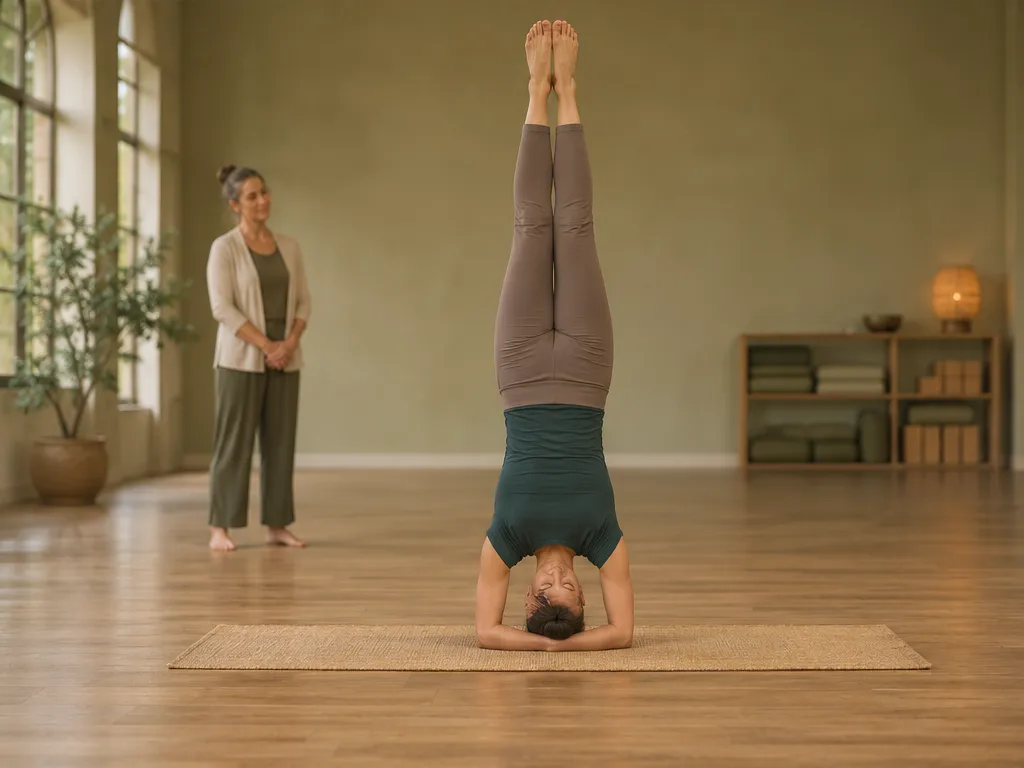
In a supported yoga headstand, or Sirsasana, the forearms share the work but the head still bears weight. A wall can change the balance challenge. It does not tell you what force is passing through the neck.
How much load reaches the head?
In a laboratory study, 45 people familiar with headstand used different ways of entering and leaving the pose. Peak forces on the head reached 40–48 percent of body weight. Those values describe measurements in that group. They cannot tell an individual how long a hold is safe or what load their neck can tolerate.
Why eye health matters
In a separate study of experienced practitioners, pressure inside the eye roughly doubled during the headstand and stayed raised while the pose was held. This observation tells us about pressure during the pose. It does not establish what happens to vision over years of practice. If you have glaucoma, a retinal condition or recent eye surgery, ask your eye clinician about inverted positions.
An upright way to explore balance
If balance is what interests you, standing tree pose with wall support gives you a challenge with the weight on your feet. If you are specifically interested in inversions, discuss your experience, any neck problems and any medical restrictions with a qualified teacher before an in-person class. A photo of the final pose cannot show the forces involved in getting there.
Sources
- Beginner yoga at home: choosing your first poses
Try mountain pose at home, choose between a chair and a mat, and learn what to look for in a beginner yoga class before you press play. - Chair yoga for beginners: three poses you can try seated
Set up a stable chair and explore seated mountain, a small seated cat movement and a side bend, with ways to adjust the range. - Downward-facing dog: how to try a supported chair variation
How downward dog works, how a higher hand support changes the pose, and what to consider if your wrists hurt or you have glaucoma. - Tree pose for beginners: finding balance beside a wall
Where to place your foot in tree pose, how to use a wall, and how to come out of the pose if you start to wobble. - Yoga breathing for beginners: a gentle introduction to pranayama
Try a quiet seated breath. Learn how alternate-nostril breathing, humming and breath retention differ, and when to pause a yoga breathing exercise. - Back muscle spasms: causes and when to get help
What sudden back tightening may mean, which symptoms need urgent care and what details to bring to a healthcare appointment.