Orthopedics · Movement and balance
Tree pose for beginners: finding balance beside a wall
This article is for general information and does not replace advice from a doctor. Medical disclaimer
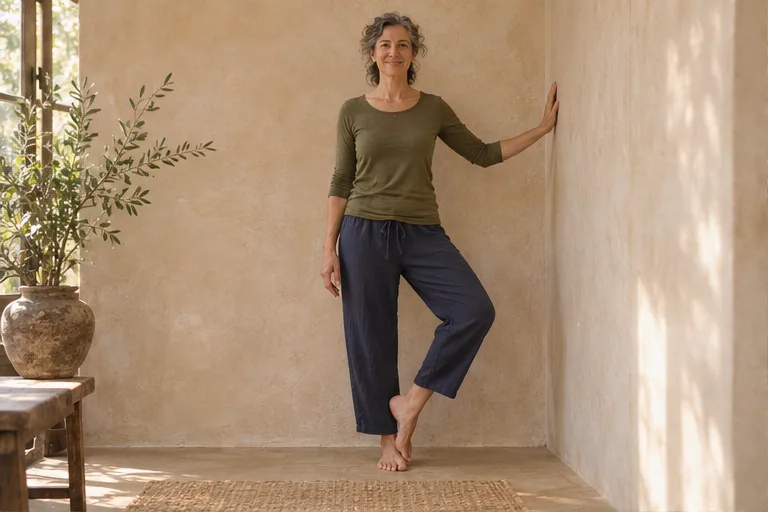
- Eyes pick a still point in front of you
- Foot keep toes down or place the foot against the calf
- Exit put the foot down before letting go of the support
In tree pose, or Vrksasana, one leg takes most of your weight while the other knee opens to the side. You can experience that shift with both feet touching the ground. A spot beside a clear wall gives your hand somewhere to land immediately.
Try the toes-down version
- Stand sideways to the wall, within easy reach. Rest your fingertips on it and look at a fixed point ahead.
- Shift your weight onto the leg nearest the wall. Bring the other heel to the inside of the standing ankle and keep those toes on the floor. Let the bent knee open only as far as the hip feels comfortable.
- To leave the pose, bring the knee forward, set the foot down and settle your weight on both feet. Turn around to try the other side with the wall within reach again.
Where can the raised foot go?
Cleveland Clinic describes placing it at the ankle, calf or thigh. Keep pressure off the side of the knee joint. If moving the foot higher makes you pull on the ankle or twist the pelvis, bring it down again. Your hand can stay on the wall throughout.
If balance keeps slipping
Change one thing at a time. Look straight ahead, keep the free toes on the floor, or move closer to the wall. If you regularly fall or get dizzy, discuss balance work with a healthcare professional. For practice with a wider base of support, try seated yoga movements.
Sources
- Beginner yoga at home: choosing your first poses
Try mountain pose at home, choose between a chair and a mat, and learn what to look for in a beginner yoga class before you press play. - Chair yoga for beginners: three poses you can try seated
Set up a stable chair and explore seated mountain, a small seated cat movement and a side bend, with ways to adjust the range. - Downward-facing dog: how to try a supported chair variation
How downward dog works, how a higher hand support changes the pose, and what to consider if your wrists hurt or you have glaucoma. - Yoga breathing for beginners: a gentle introduction to pranayama
Try a quiet seated breath. Learn how alternate-nostril breathing, humming and breath retention differ, and when to pause a yoga breathing exercise. - Yoga headstand: what research says about neck load and eye pressure
How much weight reaches the head in Sirsasana, what researchers measured in the eyes, and how beginners can explore balance while standing. - Back muscle spasms: causes and when to get help
What sudden back tightening may mean, which symptoms need urgent care and what details to bring to a healthcare appointment.