Orthodontics · Clear aligners
Clear aligner attachments: what the bumps do
This article is for general information and does not replace advice from a doctor. Medical disclaimer
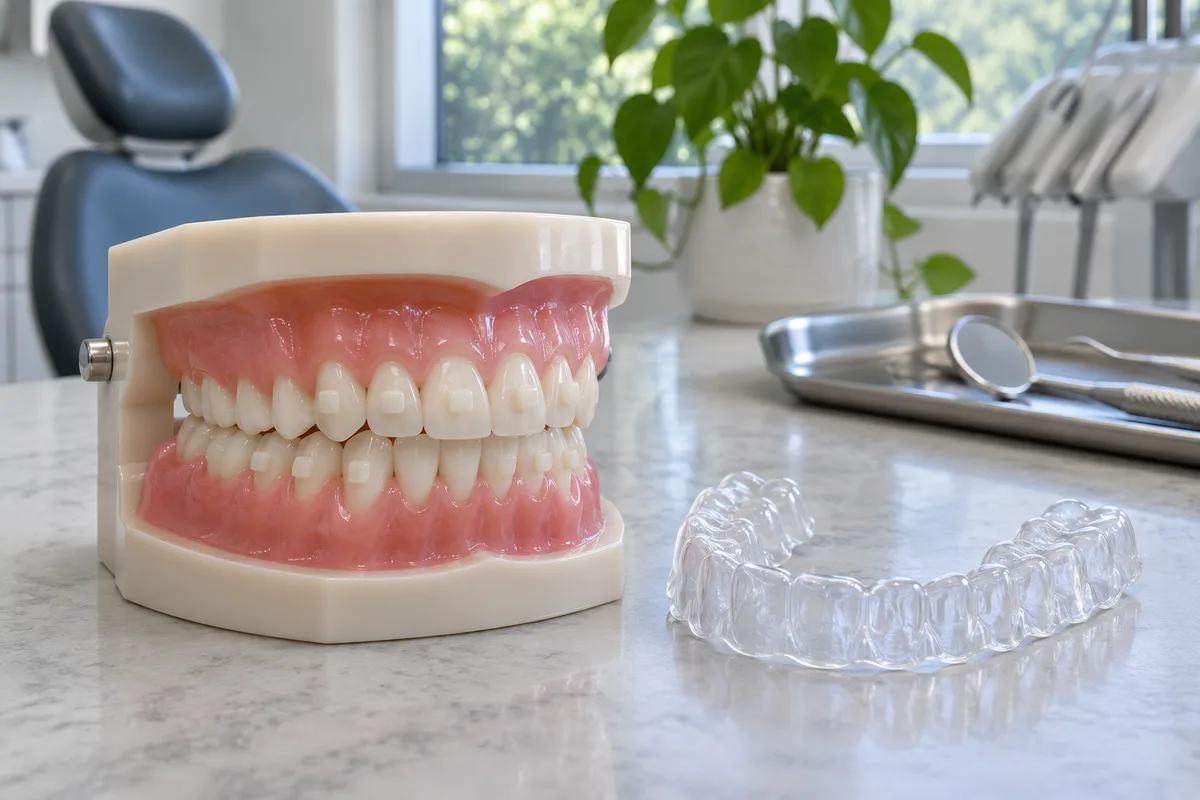
Attachments are small pieces of tooth-colored composite bonded to the enamel. Matching wells in the tray engage the attachments. That gives the orthodontist more control over how the tray applies force to a particular tooth.
Why their shapes differ
An attachment may help a tray grasp a tooth while turning it or apply force along its length. Studies of attachments test particular movements and designs. Counting the bumps in somebody else’s smile tells you little about what your treatment needs.
Living with the attachments
Composite bumps can be visible even when the tray is off. Ask the office to show you how to remove a snug tray around them. If the tray starts lifting away from one tooth, note where it happens, which tray you are wearing, and when you noticed the change.
If one comes off
Contact your orthodontist. Whether it needs prompt replacement depends on the planned movement and tray fit. Ask which tray to use until your appointment. Avoid household glue or filing the area. At the end of treatment the clinician removes the composite and checks the surface underneath.
Frequently asked questions
Does everyone with aligners need attachments?
No. The positions and number depend on the movements the plan requires and the design of the aligners.
Sources
- Attachments for the Orthodontic Aligner Treatment-State of the Art-A Comprehensive Systematic Review. International journal of environmental research and public health
- Clear aligners. British Orthodontic Society
- How Much Do Clear Aligners Cost in the U.S.?
Published U.S. clear aligner prices and how to compare scans, trays, follow-ups, refinements, replacements, and retainers. - How to clean and store clear aligners
A practical guide to cleaning compatible materials, keeping trays safe away from home, and spotting a damaged aligner. - Clear Aligners vs Braces: What the Research Shows
Reviews find braces give a more precise bite on average, most clearly when teeth are extracted, with closer results otherwise. Why DIY aligners are risky. - Braces on dental crowns: what the orthodontist checks
How crown material affects bonding and why a crown on a natural tooth is treated differently from an implant crown. - Ceramic braces: visibility, care and trade-offs
See which parts of ceramic braces stay visible, what affects bracket choice, and how to compare ceramic and metal options. - Getting Braces Removed and What Happens Next
What happens when braces come off, what removal can feel like, and what to ask before you leave with a retention plan.