Orthodontics · Clear aligners
How to clean and store clear aligners
This article is for general information and does not replace advice from a doctor. Medical disclaimer
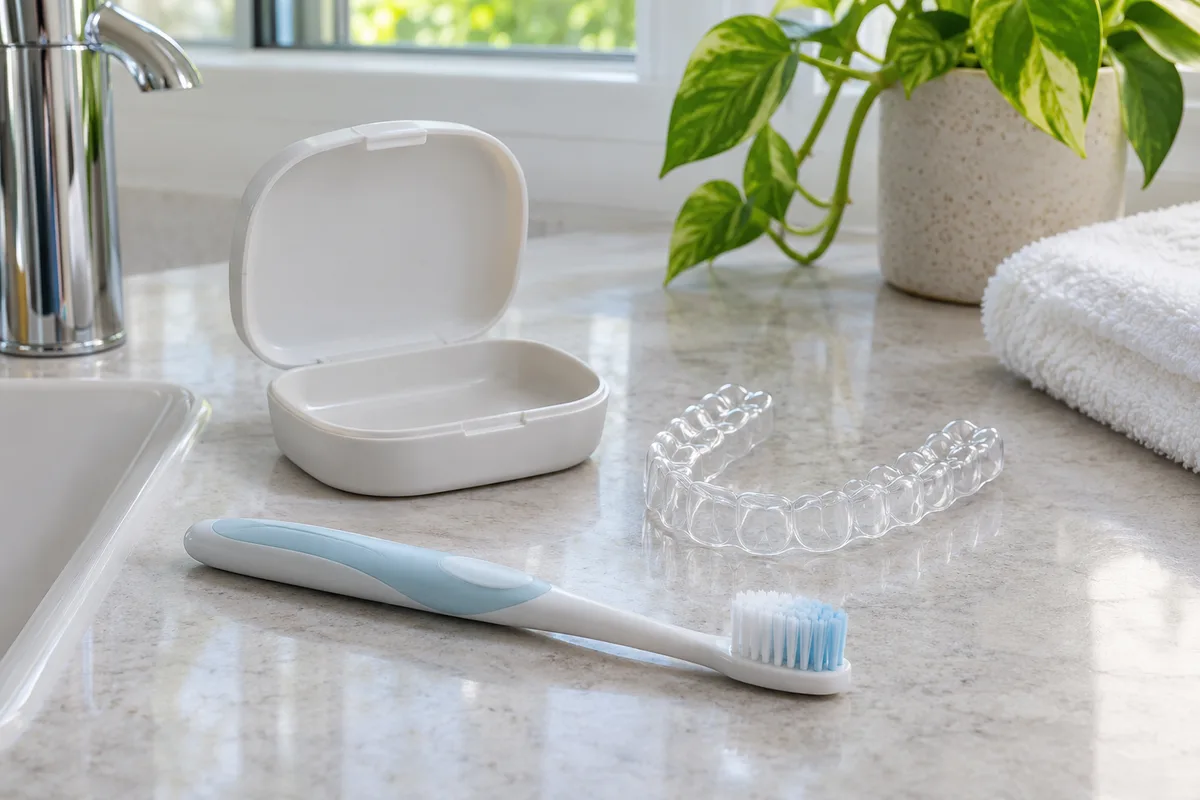
Saliva and a thin film can collect inside an aligner. Regular cleaning removes soft deposits and reduces odor. The cleaner and technique should suit the material, especially if the tray has other parts bonded to it.
Cleaning at home
Rinse the tray with cool water when you take it out. If its instructions allow, use a separate soft brush and a compatible cleaner. Hot water may warp the plastic, and abrasive toothpaste may scratch it. Avoid strong household cleaning products unless the appliance instructions specifically say they are suitable.
Away from home
Put removed trays in a clean case, rather than wrapping them in a tissue that can be thrown away. Ask the office how to manage meals at school, work, or while traveling if your usual routine is difficult. Both the teeth and the appliance need attention.
When the tray changes
Report a crack, persistent buildup, or a tray that no longer fits as before. Include which tray it is and what you used to clean it. The office can tell you whether you need a replacement or a change to the scheduled transition.
Frequently asked questions
Can I use boiling water to clean an aligner?
Heat can change its shape. Follow the specific cleaning instructions supplied for your appliance.
Sources
- Cleaning and Disinfection Protocols for Clear Orthodontic Aligners: A Systematic Review. Healthcare (Basel, Switzerland)
- Effects of cleaning methods on the removal efficacy of Streptococcus mutans biofilm and material properties of thermoplastic aligner materials. BMC oral health
- Clear aligners. British Orthodontic Society
- Clear aligner attachments: what the bumps do
Why tooth-colored attachments help some movements, what can change during wear, and when to call your orthodontist. - How Much Do Clear Aligners Cost in the U.S.?
Published U.S. clear aligner prices and how to compare scans, trays, follow-ups, refinements, replacements, and retainers. - Clear Aligners vs Braces: What the Research Shows
Reviews find braces give a more precise bite on average, most clearly when teeth are extracted, with closer results otherwise. Why DIY aligners are risky. - Braces on dental crowns: what the orthodontist checks
How crown material affects bonding and why a crown on a natural tooth is treated differently from an implant crown. - Ceramic braces: visibility, care and trade-offs
See which parts of ceramic braces stay visible, what affects bracket choice, and how to compare ceramic and metal options. - Getting Braces Removed and What Happens Next
What happens when braces come off, what removal can feel like, and what to ask before you leave with a retention plan.