Orthodontics · Retainers
A fixed retainer came loose: what to do
This article is for general information and does not replace advice from a doctor. Medical disclaimer
Interactive tools
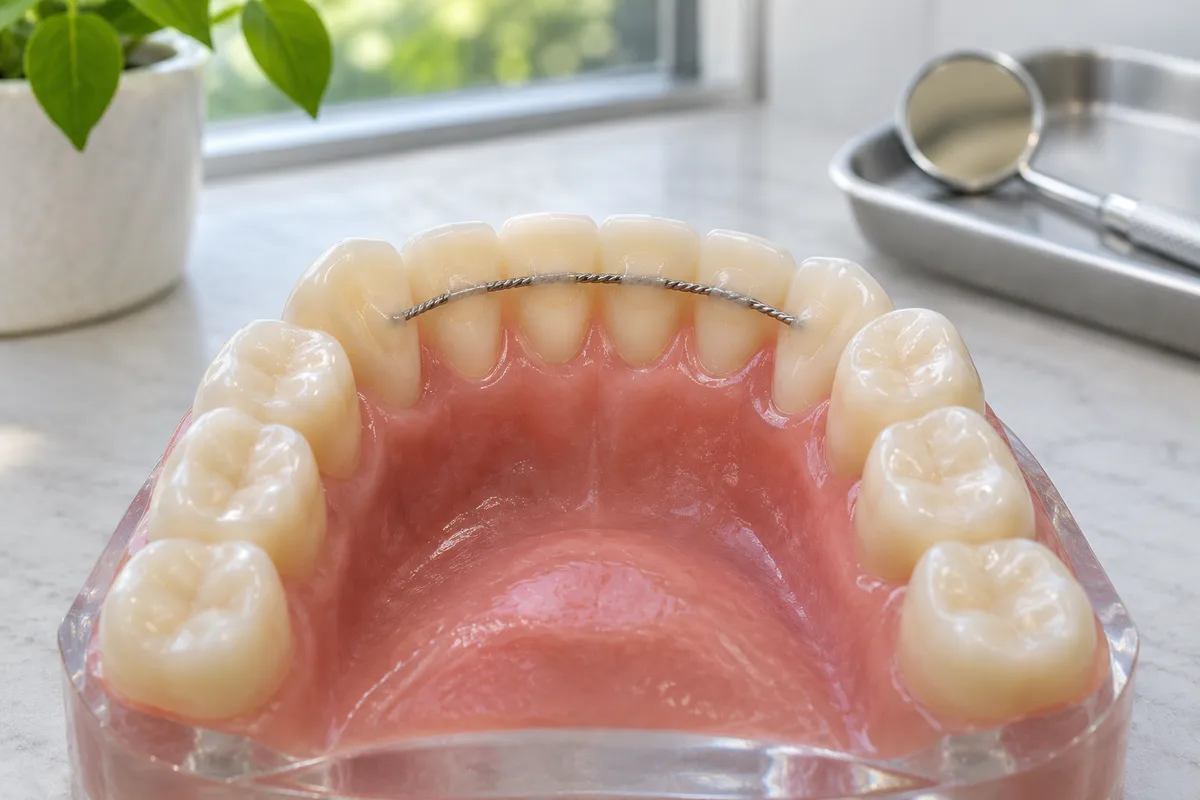
A fixed retainer is usually bonded behind the front teeth. When the bond fails at one tooth, the wire can still look mostly in place. You might first notice a rough spot with your tongue or a small change in spacing.
What to tell the office
Describe which part seems loose, whether the edge rubs, and when you noticed it. Mention any change in the position of your teeth or the way they meet. A painless break is still worth reporting.
What the orthodontist checks
The clinician looks for a broken bond or wire and checks whether the wire lies against the teeth passively. A bent wire can put unwanted force on teeth. The orthodontist can decide if a repair is suitable or the retainer should be replaced.
While you wait
Avoid pulling on the wire or gluing it. If you have a removable retainer, ask whether it is suitable to use while you wait. Suspected inhalation of a missing part needs emergency assessment.
Frequently asked questions
Does a loose retainer matter if it does not hurt?
Yes. A tooth can lose its retention even when you feel no pain.
Sources
- Orthodontic Retainers. American Association of Orthodontists
- Retention procedures for stabilising tooth position after treatment with orthodontic braces. Cochrane Database of Systematic Reviews
- What Is an Orthodontic Emergency?. American Association of Orthodontists
- Retainers after braces: clear, Hawley and fixed
How clear, Hawley and bonded retainers differ in everyday use, cleaning, monitoring and what can go wrong. - Retainers After Braces: Why Teeth Shift and How Long to Wear Them
Teeth tend to drift after braces or aligners. What a Cochrane review says about fixed and removable retainers, and why long-term wear is advised. - What a lateral cephalometric X-ray shows
What the orthodontist measures on a lateral cephalometric X-ray and how it differs from a panoramic X-ray and a digital scan. - Deep bite in adults: when and how it is corrected
How an orthodontist assesses a deep bite, when it can injure the tissues and what studies say about clear aligners and braces. - Digital impressions and photographs in orthodontics
Why orthodontists take dental scans and photographs, what each record shows and when X-rays answer a different question. - Gap between the front teeth: when it is a diastema
Why a gap can appear between the front teeth, when it may close as a child grows and why a new gap in an adult needs assessment.