Orthodontics · Care and risks
Why braces hurt and when to call your orthodontist
This article is for general information and does not replace advice from a doctor. Medical disclaimer
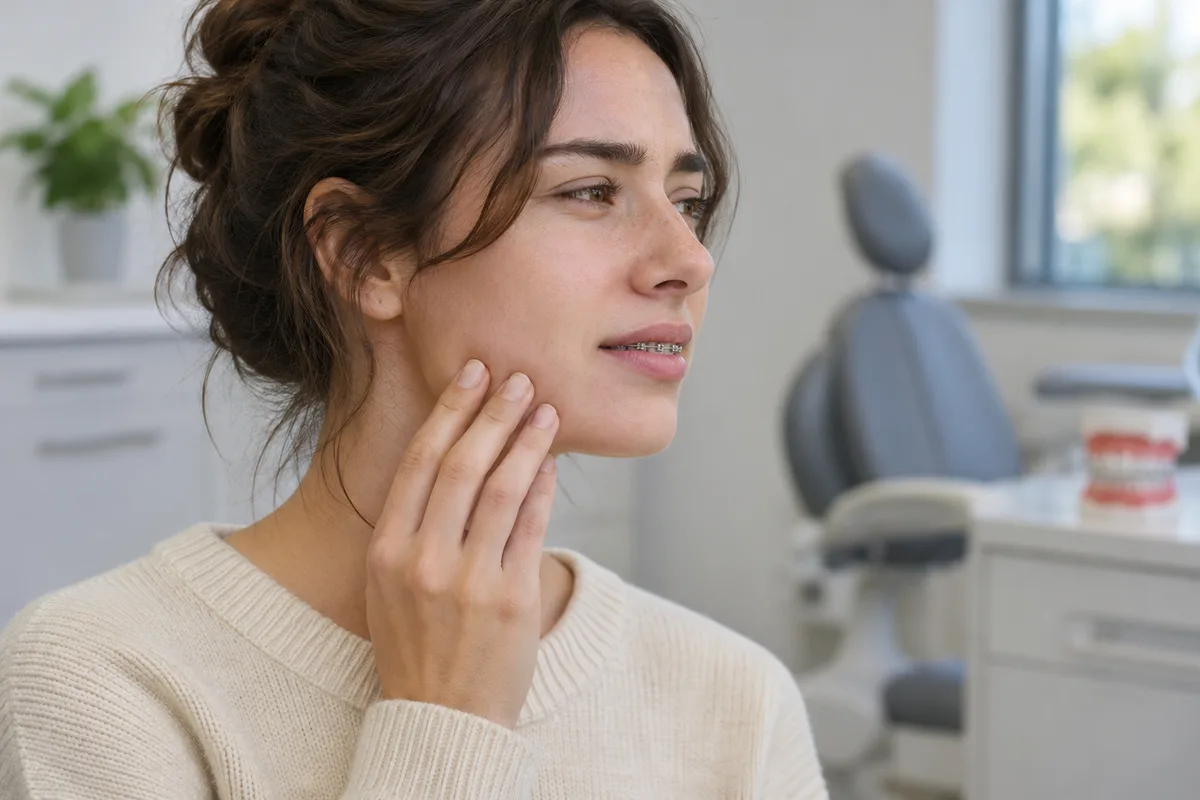
After braces are fitted or adjusted, biting down can make several teeth feel tender. A sharp spot rubbing your cheek feels different. Knowing where the discomfort is and whether it is improving helps your orthodontic office decide how quickly you need to be seen.
Pressure or rubbing?
Tenderness from pressure may start a few hours after the appointment and often eases over the next several days. A wire end or bracket that rubs usually creates a sore spot you can point to inside the lip or cheek. A bracket that has detached can still be threaded onto the wire and may slide along it.
Notice whether several teeth hurt when you chew or one tooth hurts even at rest. Also note whether pain interrupts sleep and whether you recently bumped the teeth. Those details matter even if the braces look intact.
What to tell the office
Share your last adjustment date, when symptoms began, and whether they are changing. For tenderness while chewing, foods that are easier to bite can make meals more comfortable. When there is a loose part or a sharp wire, tell the office where it is and what it touches. A clear photo may help if the team asks for one.
When symptoms need prompt attention
Call your orthodontist if pain keeps worsening, does not improve, or makes eating and sleeping difficult. Severe pain with facial swelling, fever, or an injury warrants urgent assessment. Trouble breathing is an emergency. An examination can show whether the appliance needs attention or whether the problem is in a tooth or the tissue around it.
Frequently asked questions
How long do teeth stay sore after getting braces?
Sensitivity is often most noticeable in the first few days and then eases. Call your orthodontist if it keeps getting worse or fails to improve.
Does more pain mean faster tooth movement?
Pain does not tell you how quickly teeth are moving. Your orthodontist assesses progress at follow-up visits.
Sources
- Do Braces Hurt? Your Comprehensive Guide to Managing Orthodontic Pain. American Association of Orthodontists
- What Is an Orthodontic Emergency?. American Association of Orthodontists
- Fixed appliances. Nottingham University Hospitals NHS Trust
- A braces bracket came loose: when to get help
How to tell a detached bracket from a poking wire, what your orthodontic office needs to know, and when to get urgent care. - What to Eat With Braces and Which Foods to Avoid
Soft foods for the first few days, practical ways to adapt meals, and what to tell your orthodontist about a loose bracket. - White spots after braces: what the dentist checks
What white marks can mean after braces come off, and why a dentist examines the enamel before discussing cosmetic options. - How to Clean Your Teeth With Braces: A Daily Routine
A step-by-step cleaning routine for braces based on AAO guidance, what to eat and drink, and what trials show about electric brushes and fluoride. - Risks of Orthodontic Treatment: Enamel, Roots, Gums and Pain
White spots on enamel, root shortening, small gum changes and soreness are the main side effects of braces. How common they are and what lowers the risk. - Clear aligner attachments: what the bumps do
Why tooth-colored attachments help some movements, what can change during wear, and when to call your orthodontist.