Orthodontics · Basics
Tooth extractions for braces: how the decision is made
This article is for general information and does not replace advice from a doctor. Medical disclaimer
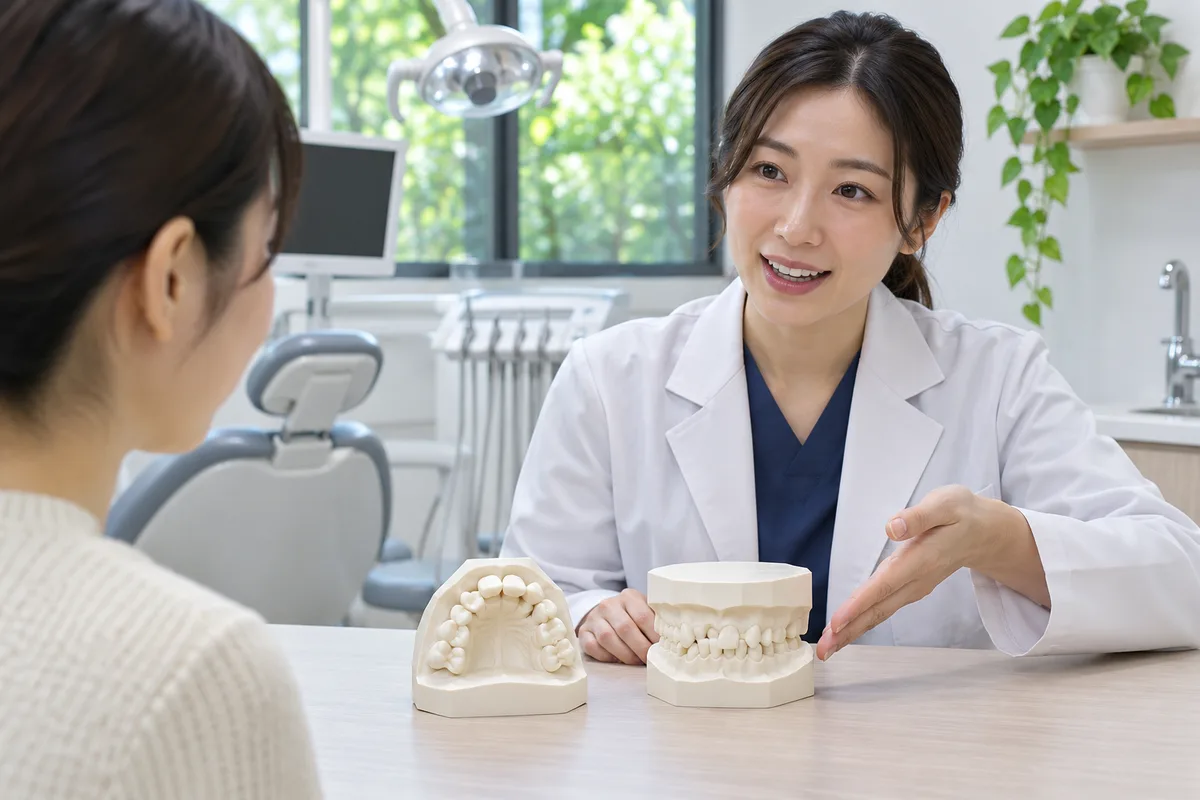
Crowded teeth sometimes need extra room before they can move into position. Premolar extraction is one way to create that room. The bite, the position of the front teeth, supporting tissues, and facial profile all inform the decision.
What the orthodontist compares
The clinician measures the space shortage and considers which movements the bone and gums can support. Widening an arch or making selected teeth slightly narrower may not be appropriate for your bite.
What studies can tell you
Research comparing extraction and nonextraction plans includes patients with different starting conditions. Average effects on teeth or facial profile cannot tell you how a particular plan will affect yours.
Questions before deciding
Ask to see where the front teeth would end up with each feasible option. Ask why the proposed tooth was chosen, who would carry out the extraction, and what the plan is for closing and retaining the space.
Frequently asked questions
Is extraction required for all crowding?
No. The decision depends on the amount of crowding and the wider goals of treatment.
Sources
- Extraction vs nonextraction orthodontic treatment: a systematic review and meta-analysis. The Angle Orthodontist
- Everything you need to know before having your teeth straightened. British Orthodontic Society
- Interproximal reduction: how orthodontists make space
What enamel reduction between teeth means, how it differs from separators, and what to ask before agreeing to it. - Palatal expanders for children: what to expect
Why an orthodontist may recommend an upper jaw expander, what a crossbite has to do with it, and what happens after widening. - Wisdom teeth before braces: when removal is considered
How third molars are assessed, what the evidence says about crowding, and what to ask about timing. - Early Orthodontic Treatment for Children: When It Helps
What Cochrane reviews show about two-phase treatment for protruding teeth, underbites, crossbites and thumb sucking, and why it is not right for every child. - Types of Malocclusion: Bite Problems and How Common They Are
Class I, II and III bites, crossbite, open bite, deep bite and crowding explained, with prevalence figures from a US survey and a review of 53 studies. - Orthodontics for Adults: Gum Health, Timing and Options
The AAO says one in three orthodontic patients is an adult. How adult treatment differs: gum health, treatment time, aligners versus braces and retainers.