Orthodontics · Basics
Wisdom teeth before braces: when removal is considered
This article is for general information and does not replace advice from a doctor. Medical disclaimer
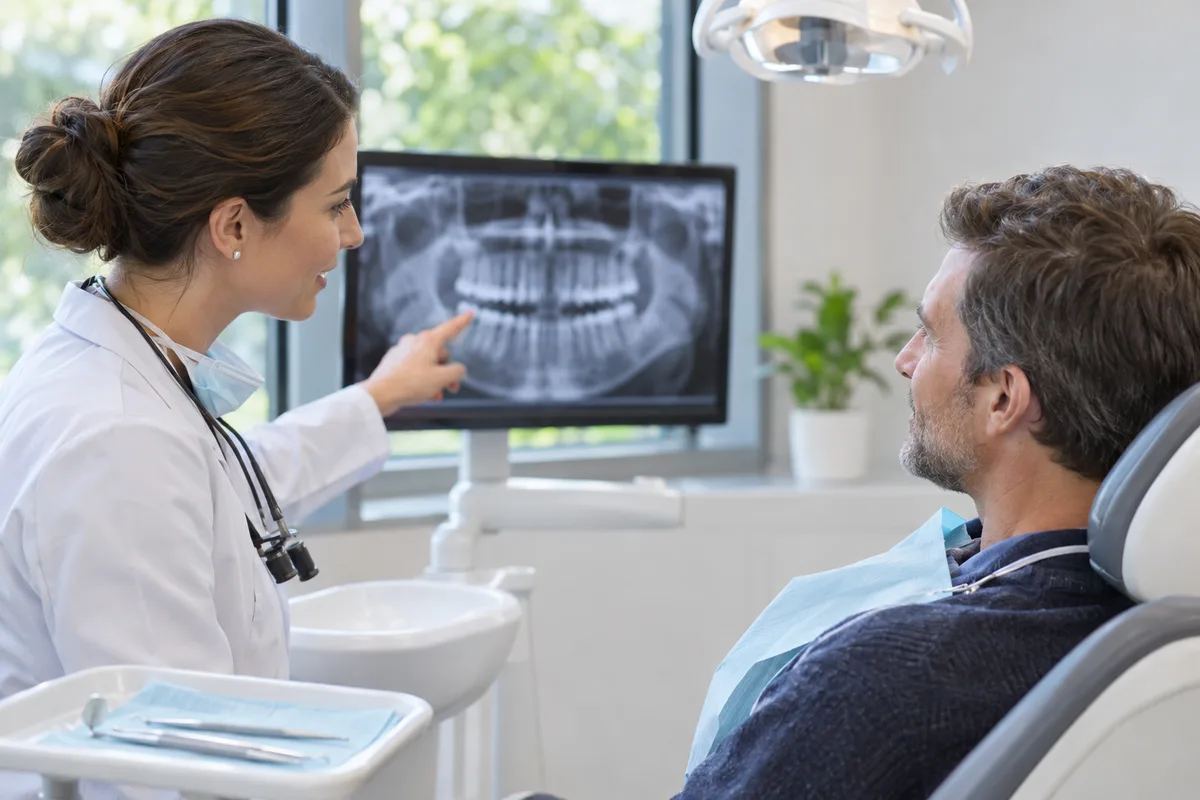
A clinician considers the wisdom teeth and nearby molars before planning braces. Whether removal is useful depends on disease, tooth position and the proposed movements. Having wisdom teeth is not, by itself, a reason to remove them before orthodontics.
What the exam and images show
The clinician checks whether the tooth has erupted and whether the surrounding tissue or adjacent molar shows disease. Repeated inflammation or damage to a neighboring tooth may warrant an oral surgery consultation for its own sake. Imaging and symptoms inform the same decision.
Do wisdom teeth cause late crowding?
A randomized study after orthodontic treatment found no clinically important reduction in lower front tooth crowding from removing third molars. The Cochrane review judged this trial at high risk of bias. There are multiple reasons teeth change position over time. A discussion about wisdom teeth and a plan to retain the orthodontic result serve different purposes.
Questions about timing
Ask what specific finding makes removal advisable now and whether care could be planned in another order. Find out who will review the tooth if it stays. When getting a second opinion, bring the same images so the clinicians can address the same findings.
Frequently asked questions
Can a painless wisdom tooth still need attention?
Yes. Symptoms are one piece of the evaluation. The exam and images can reveal problems before a tooth hurts.
Sources
- Wisdom tooth removal. NHS
- Surgical removal versus retention for the management of asymptomatic disease-free impacted wisdom teeth. Cochrane Database of Systematic Reviews
- Interproximal reduction: how orthodontists make space
What enamel reduction between teeth means, how it differs from separators, and what to ask before agreeing to it. - Palatal expanders for children: what to expect
Why an orthodontist may recommend an upper jaw expander, what a crossbite has to do with it, and what happens after widening. - Tooth extractions for braces: how the decision is made
Why an orthodontist may suggest premolar extraction, and what to ask when comparing an extraction plan with other options. - Early Orthodontic Treatment for Children: When It Helps
What Cochrane reviews show about two-phase treatment for protruding teeth, underbites, crossbites and thumb sucking, and why it is not right for every child. - Types of Malocclusion: Bite Problems and How Common They Are
Class I, II and III bites, crossbite, open bite, deep bite and crowding explained, with prevalence figures from a US survey and a review of 53 studies. - Orthodontics for Adults: Gum Health, Timing and Options
The AAO says one in three orthodontic patients is an adult. How adult treatment differs: gum health, treatment time, aligners versus braces and retainers.