Orthopedics · Braces and supports
Abdominal binders after surgery: fit and questions to ask
This article is for general information and does not replace advice from a doctor. Medical disclaimer
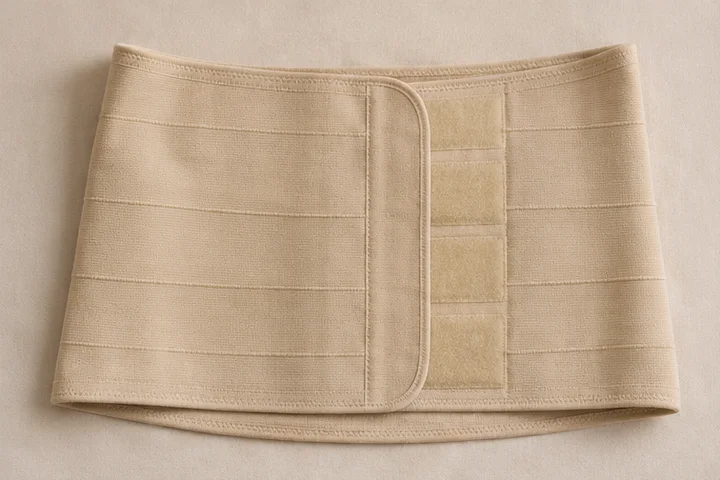
- Edges where do they fall when sitting and standing?
- Access is there room for a dressing or drain?
- Closure can you manage it comfortably?
An abdominal binder is a broad wrap worn around the abdomen. Some people find it more comfortable to move with support in the early days after surgery. Whether a binder is useful depends on the procedure and the advice of the team following your recovery.
What the studies found
A review of randomized studies after a midline incision found a possible short-term reduction in pain and improvement in early activity. A broader 2024 review found considerable variation in the studies and no evidence that binders prevent wound separation or incisional hernia. Comfort during movement and wound healing are separate outcomes.
Compare the fit and construction
| Feature | Question for the fitting |
|---|---|
| Width | Where do the top and bottom edges land when sitting or standing? |
| Size | Which body measurement does this model use, and should it be checked again after surgery? |
| Closure | Can you manage the fastener comfortably with the use of your hands you have now? |
| Edges and seams | Will any edge press on a dressing, drain, stoma or sore area? |
Discuss these details with your team. Two binders may cover different parts of the abdomen even when the waist measurements on their packaging overlap.
Questions for the surgical team
Ask what the binder is intended to help with, how you would tell whether it is useful and which symptoms need a review. Increasing pain, a change in the wound or trouble breathing warrants contact with the surgical team. See back support belts for a separate device with a different use.
Sources
- Compression stockings: types, sizing and fit
Compare knee-high, thigh-high and waist-high compression garments. Check pressure labelling, measurements and fitting questions. - Ankle Braces After a Sprain: Recovery and Preventing Repeats
For most ankle sprains, guidelines favor early movement, exercise and a brace or tape, and bracing has strong evidence for preventing repeat sprains. - Back Support Belts: Do They Prevent or Treat Low Back Pain?
Back belts have not been shown to prevent back injuries at work, and their value for treating back pain is unclear. What studies found and what helps instead. - Knee Braces for Osteoarthritis: What Guidelines Recommend
US guidelines support knee braces for some people with knee osteoarthritis, but trial results are mixed. Which brace suits which problem and what comes first. - Beginner yoga at home: choosing your first poses
Try mountain pose at home, choose between a chair and a mat, and learn what to look for in a beginner yoga class before you press play. - Chair yoga for beginners: three poses you can try seated
Set up a stable chair and explore seated mountain, a small seated cat movement and a side bend, with ways to adjust the range.