Orthopedics · Braces and supports
Compression stockings: types, sizing and fit
This article is for general information and does not replace advice from a doctor. Medical disclaimer
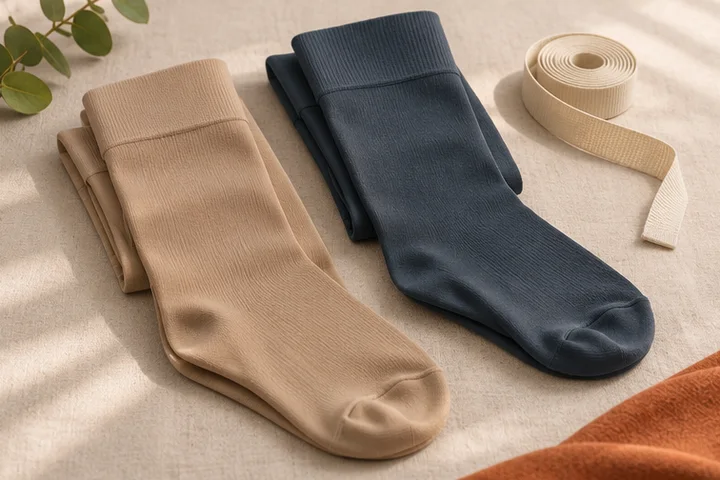
- Length knee, thigh or waist
- Pressure range in mmHg and the standard used
- Measurements use the chart for the exact model
Medical graduated compression garments are designed to apply more pressure near the ankle and less higher up the leg. A clinician can help establish whether compression is suitable for the problem and what pressure and length are appropriate. Sizing then follows the chart for the specific product.
What to compare on the label
| Feature | Why it matters |
|---|---|
| Knee-high, thigh-high or waist-high | Determines where the garment ends and affects comfort during regular use |
| Pressure range in mmHg | Gives more detail than a class number, which may refer to a different system in another country |
| Measurement chart | Ankle and calf circumference and leg length may be required; taller garments may need further measurements |
Keep the name of the product and the measurements used to select it. If you are buying a replacement while abroad, check the pressure range as well as the size and length. Ask about fitting support if your hands make the garment difficult to put on.
Check the way it sits
The material should lie smoothly, with no twist, roll or deep crease. New pain, numbness or a change in the colour of your toes warrants prompt medical advice. If there is new swelling or pain on one side, get the cause assessed before shopping for a garment.
Stockings and varicose veins
Compression stockings may help manage symptoms when they are appropriate. NHS guidance considers whether other treatments are suitable and whether circulation permits compression. Ask which symptom is being addressed, where the stocking should end and who will check your fit.
Arterial problems and reduced sensation can change whether compression is appropriate. Ask about the pressure, how to monitor the skin and whether changes in swelling mean your measurements should be checked again. Explore related devices in the orthopedics guide.
Sources
- Abdominal binders after surgery: fit and questions to ask
Learn what evidence says about postoperative binders, how to compare width and closure, and what to ask your surgical team about fit. - Ankle Braces After a Sprain: Recovery and Preventing Repeats
For most ankle sprains, guidelines favor early movement, exercise and a brace or tape, and bracing has strong evidence for preventing repeat sprains. - Back Support Belts: Do They Prevent or Treat Low Back Pain?
Back belts have not been shown to prevent back injuries at work, and their value for treating back pain is unclear. What studies found and what helps instead. - Knee Braces for Osteoarthritis: What Guidelines Recommend
US guidelines support knee braces for some people with knee osteoarthritis, but trial results are mixed. Which brace suits which problem and what comes first. - Beginner yoga at home: choosing your first poses
Try mountain pose at home, choose between a chair and a mat, and learn what to look for in a beginner yoga class before you press play. - Chair yoga for beginners: three poses you can try seated
Set up a stable chair and explore seated mountain, a small seated cat movement and a side bend, with ways to adjust the range.