Orthopedics · Movement and balance
Balance cushions: what they do and how to choose one
This article is for general information and does not replace advice from a doctor. Medical disclaimer
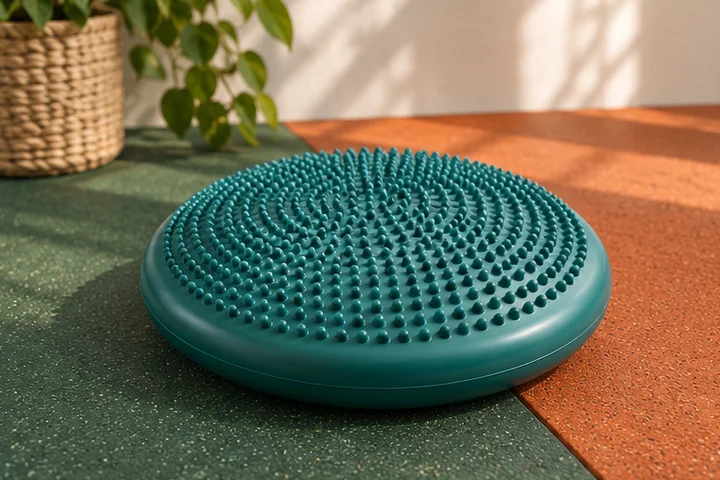
- Floor the base stays firm and level
- Foam the material compresses underfoot
- Air disc movement depends on inflation
A balance cushion is a soft or air-filled surface that moves a little under load. It makes maintaining balance more demanding. Start by defining the movement you want to improve, such as maintaining stability while changing direction.
Compare the surfaces
| Surface | What it changes |
|---|---|
| Firm floor | A stable base while you vary your position |
| Foam pad | Compresses under the foot, with no inflation setting |
| Air-filled disc | Movement varies with construction and inflation |
Check the usable surface, grip on your floor, and stated weight limit. Confirm that the item is designed for standing if that is your intended use. Some seating cushions look similar to standing equipment.
What the evidence covers
Ankle-sprain guidelines include balance work in rehabilitation for some patients. A Cochrane falls review assessed structured exercise programmes for community-dwelling older adults. Programmes that included balance and functional work reduced falls. These are findings about programmes, which may involve progression and support, rather than evidence that owning a particular cushion improves outcomes.
Before adding a moving surface
If you are unsteady on the floor, have had falls, feel dizzy or are recovering from an injury, discuss equipment with a physiotherapist. Ask what movement the equipment is meant to address, whether you need support nearby and how you will judge your progress. See also ankle braces after a sprain.
Sources
- Beginner yoga at home: choosing your first poses
Try mountain pose at home, choose between a chair and a mat, and learn what to look for in a beginner yoga class before you press play. - Chair yoga for beginners: three poses you can try seated
Set up a stable chair and explore seated mountain, a small seated cat movement and a side bend, with ways to adjust the range. - Downward-facing dog: how to try a supported chair variation
How downward dog works, how a higher hand support changes the pose, and what to consider if your wrists hurt or you have glaucoma. - Tree pose for beginners: finding balance beside a wall
Where to place your foot in tree pose, how to use a wall, and how to come out of the pose if you start to wobble. - Yoga breathing for beginners: a gentle introduction to pranayama
Try a quiet seated breath. Learn how alternate-nostril breathing, humming and breath retention differ, and when to pause a yoga breathing exercise. - Yoga headstand: what research says about neck load and eye pressure
How much weight reaches the head in Sirsasana, what researchers measured in the eyes, and how beginners can explore balance while standing.