Orthopedics · Movement and balance
Children’s play mats: foam, folding and textured options
This article is for general information and does not replace advice from a doctor. Medical disclaimer
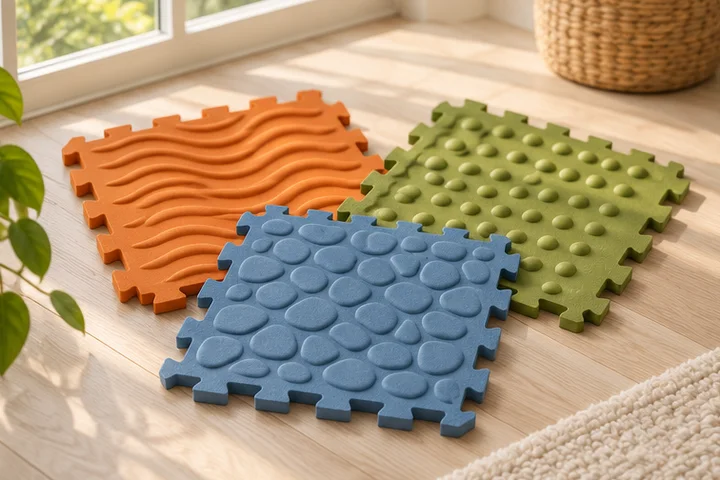
- Edges corners and seams should lie flat
- Space leave room to move around the mat
- Cleaning check that you can clean folds and grooves
A play mat defines an area for floor play. Start with the space and the child’s current movements. A crawling child reaches beyond the mat, so consider the edges, surrounding furniture and any small objects within reach.
Compare the formats on your own floor
| Format | What to look for |
|---|---|
| One-piece or folding | Grip underneath, flat edges and easily cleaned folds |
| Interlocking tiles | Secure seams, no gaps or loose small pieces |
| Textured mat | A surface the child is comfortable exploring and grooves you can clean |
Check the age label and care instructions. A thick mat can still slide or have curled edges. Put it where it will be used and check how it sits against the floor. For infants, floor play is a supervised awake activity; follow the guidance for a separate safe sleep surface.
Movement and foot development
The WHO and NHS describe active floor-based play as a way for young children to move. The play surface can offer a variety of sensations. Claims that textured mats prevent flat feet or change the shape of an arch need evidence for that specific product. A Cochrane review of orthoses in children studied inserts, not mats.
A child who reports foot pain, uses the two sides differently or avoids activities should be assessed. See flat feet in children for the difference between common painless variations and symptoms worth discussing.
Sources
- Beginner yoga at home: choosing your first poses
Try mountain pose at home, choose between a chair and a mat, and learn what to look for in a beginner yoga class before you press play. - Chair yoga for beginners: three poses you can try seated
Set up a stable chair and explore seated mountain, a small seated cat movement and a side bend, with ways to adjust the range. - Downward-facing dog: how to try a supported chair variation
How downward dog works, how a higher hand support changes the pose, and what to consider if your wrists hurt or you have glaucoma. - Tree pose for beginners: finding balance beside a wall
Where to place your foot in tree pose, how to use a wall, and how to come out of the pose if you start to wobble. - Yoga breathing for beginners: a gentle introduction to pranayama
Try a quiet seated breath. Learn how alternate-nostril breathing, humming and breath retention differ, and when to pause a yoga breathing exercise. - Yoga headstand: what research says about neck load and eye pressure
How much weight reaches the head in Sirsasana, what researchers measured in the eyes, and how beginners can explore balance while standing.