Orthopedics · Insoles
Custom vs prefabricated insoles: how to compare
This article is for general information and does not replace advice from a doctor. Medical disclaimer
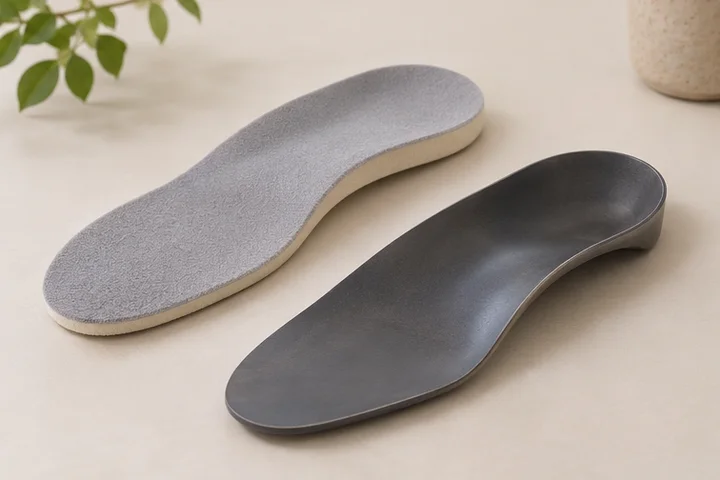
- Shape specified for an individual foot
- Fitting check it inside the shoes you actually wear
- Price ask whether adjustment visits are included
A prefabricated insole comes in standard shapes and sizes and can sometimes be adjusted. A custom device is made for a particular foot from measurements, a cast or a scan. Either design needs to fit the footwear and address a defined problem.
What changes with a custom device?
| Question | Prefabricated | Custom |
|---|---|---|
| How is the shape chosen? | A selection of sizes and contours | A specific shape and goal are specified |
| When can you try it? | Often before buying | Ask when it can be fitted in your footwear |
| What does the price cover? | Check the return or adjustment policy | Ask about fabrication, fitting and follow-up adjustments |
A Canadian review found no clear advantage for custom devices on pain or function over prefabricated ones in the studies of adults with heel pain it examined. Evidence quality limits confidence and the findings do not cover every foot problem.
Ask what the design is meant to do
Ask which part should support the foot and what everyday movement should become easier. Find out whether the device can be adjusted if it is too thick for your shoes. If skin is damaged or sensation is reduced, have the fit assessed by a professional.
Start with the types of orthotic insoles or use the shoe and insole fit check.
Sources
- How to choose orthotic insoles: fit and types
Compare cushioning inserts, prefabricated orthoses and custom devices. Learn what to check inside your shoes and what to ask at a fitting. - Orthotic insoles and shoes: how to check the fit
Check heel depth, toe space and insole movement before altering an orthosis. Learn what to bring to a fitting or follow-up. - Insoles for Plantar Fasciitis: What the Evidence Shows
In trials, insoles alone did little for plantar fasciitis pain. Guidelines favor stretching, taping and night splints, with insoles only as an add-on. - Beginner yoga at home: choosing your first poses
Try mountain pose at home, choose between a chair and a mat, and learn what to look for in a beginner yoga class before you press play. - Chair yoga for beginners: three poses you can try seated
Set up a stable chair and explore seated mountain, a small seated cat movement and a side bend, with ways to adjust the range. - Downward-facing dog: how to try a supported chair variation
How downward dog works, how a higher hand support changes the pose, and what to consider if your wrists hurt or you have glaucoma.