Orthopedics · Insoles
How to choose orthotic insoles: fit and types
This article is for general information and does not replace advice from a doctor. Medical disclaimer
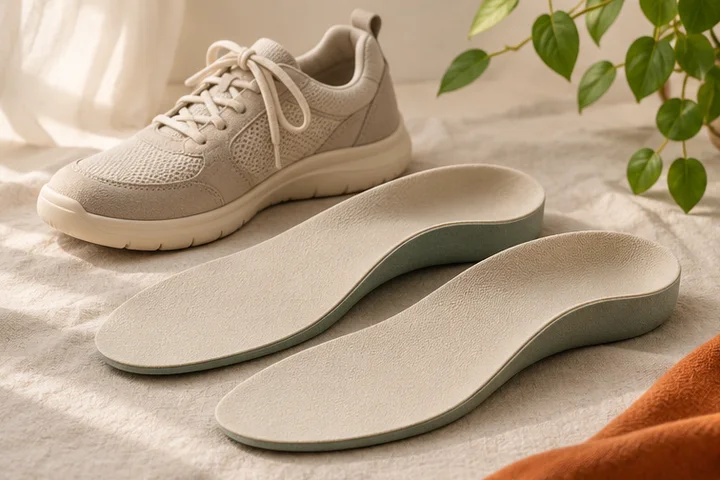
- Goal decide which activity should feel easier
- Footwear check heel security and room for the toes
- Terms ask about returns and adjustments
Start with one activity you want to make more comfortable, such as walking to work or standing through a shift. A cushioning insert adds padding. A contoured foot orthosis is shaped to support an area or alter how load is distributed. The shoe and insert work as a pair.
What are you comparing?
| Insert | What to check |
|---|---|
| Cushioned liner | Thickness and remaining space above the toes |
| Prefabricated orthosis | Where the contour makes contact and whether the heel sits securely in the shoe |
| Custom foot orthosis | The specific fitting problem it addresses, plus the cost of adjustments and follow-up |
For plantar heel pain, the 2023 clinical practice guideline considers orthoses alongside other care. It advises against relying on them alone for short-term relief. That recommendation concerns plantar fasciitis and does not establish what is causing an individual person’s pain.
Check the fit in your own shoes
Bring the shoes and socks you use for the activity. If the shoe liner can be removed, check whether replacing it leaves enough room for your toes. The insert should lie flat, without pushing your heel out of the shoe. Ask about the trial and return policy before trimming an insert bought online. For a custom device, ask whether the price includes a fitting and later adjustments.
A persistent pressure mark, new numbness or more pain calls for a fit check. If you have reduced sensation or a wound on your foot, discuss any insert with your foot-care clinician.
When different evidence applies
A Cochrane review found no clear evidence to support expensive custom orthoses in otherwise healthy children with painless flexible flat feet. A child who has pain, an uneven change in foot shape or difficulty staying active needs a different assessment. Read about flat feet in children and insoles for plantar fasciitis.
Where to go next
If you are comparing prices and designs, read custom versus prefabricated insoles. If you already own a pair that rubs, use the shoe and insole fit check.
Sources
- Custom vs prefabricated insoles: how to compare
Compare fitting, adjustments and total cost. See what research found when custom and prefabricated foot orthoses were compared for heel pain. - Orthotic insoles and shoes: how to check the fit
Check heel depth, toe space and insole movement before altering an orthosis. Learn what to bring to a fitting or follow-up. - Insoles for Plantar Fasciitis: What the Evidence Shows
In trials, insoles alone did little for plantar fasciitis pain. Guidelines favor stretching, taping and night splints, with insoles only as an add-on. - Beginner yoga at home: choosing your first poses
Try mountain pose at home, choose between a chair and a mat, and learn what to look for in a beginner yoga class before you press play. - Chair yoga for beginners: three poses you can try seated
Set up a stable chair and explore seated mountain, a small seated cat movement and a side bend, with ways to adjust the range. - Downward-facing dog: how to try a supported chair variation
How downward dog works, how a higher hand support changes the pose, and what to consider if your wrists hurt or you have glaucoma.