Orthopedics · Insoles
Orthotic insoles and shoes: how to check the fit
This article is for general information and does not replace advice from a doctor. Medical disclaimer
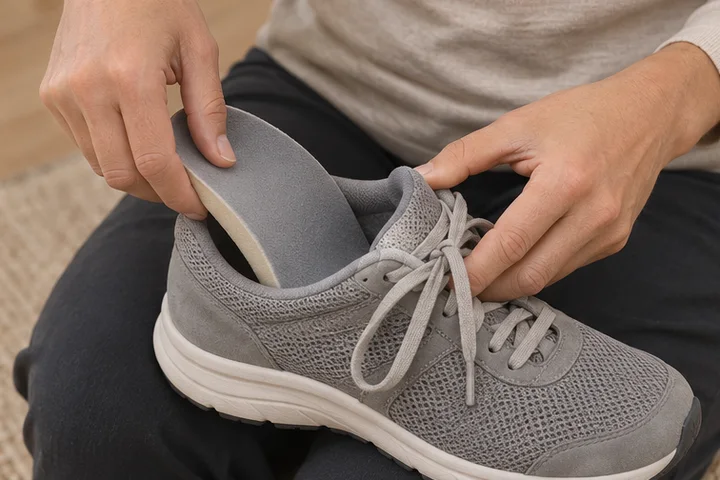
- Heel stays seated against the back
- Toes have room above and in front
- Insert lies flat and does not move around
A well-shaped insert still needs enough room inside the shoe. The removable liner, heel depth and fastening can all change how the foot and orthosis sit together.
Check before trimming
| What you notice | What to check |
|---|---|
| Your heel lifts | Is the original liner removable, and is there enough heel depth? |
| The tops of the toes feel crowded | How thick is the insert at the front, and is the toe box deep enough? |
| The insert lifts or slides | Does it sit flat and match the dimensions of the shoe? |
| One shoe works and another does not | Compare the depth, shape and fastening of the two shoes |
Bring your usual socks and the shoes you wear for the intended activity. Try both sides. Ask the supplier whether altering or trimming an insert affects returns. If it was prescribed or made for you, take it to the fitting service for adjustments.
When to ask for another fitting
Rubbing, lasting pressure marks, numbness or increasing pain are reasons to have the fit reviewed. With diabetes, damaged skin or reduced foot sensation, get advice before changing the device. Bring both the shoes and the insert so the clinician can see where the pressure occurs.
Read the insole selection guide and the custom and prefabricated comparison.
Sources
- Custom vs prefabricated insoles: how to compare
Compare fitting, adjustments and total cost. See what research found when custom and prefabricated foot orthoses were compared for heel pain. - How to choose orthotic insoles: fit and types
Compare cushioning inserts, prefabricated orthoses and custom devices. Learn what to check inside your shoes and what to ask at a fitting. - Insoles for Plantar Fasciitis: What the Evidence Shows
In trials, insoles alone did little for plantar fasciitis pain. Guidelines favor stretching, taping and night splints, with insoles only as an add-on. - Beginner yoga at home: choosing your first poses
Try mountain pose at home, choose between a chair and a mat, and learn what to look for in a beginner yoga class before you press play. - Chair yoga for beginners: three poses you can try seated
Set up a stable chair and explore seated mountain, a small seated cat movement and a side bend, with ways to adjust the range. - Downward-facing dog: how to try a supported chair variation
How downward dog works, how a higher hand support changes the pose, and what to consider if your wrists hurt or you have glaucoma.