Orthopedics · Movement and balance
Posture and back pain: what the evidence shows
This article is for general information and does not replace advice from a doctor. Medical disclaimer
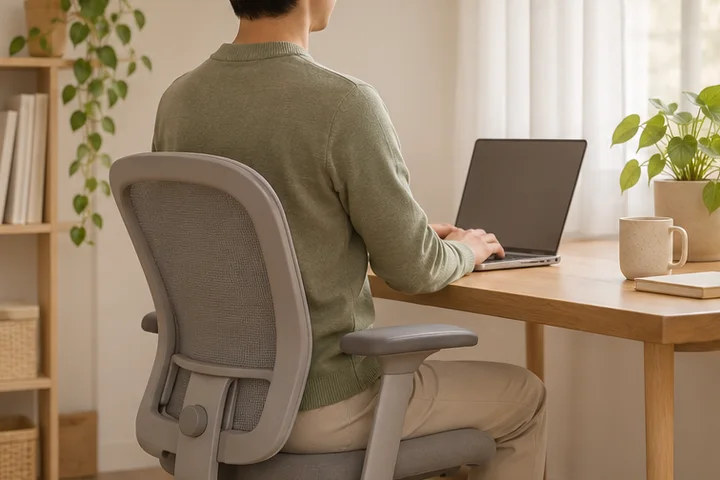
- Task what are you doing when symptoms begin?
- Timing does changing position affect them?
- Limitation which action is harder to do?
A photograph captures the way someone is sitting or standing at one moment. To investigate back pain, it helps to know what happens when a person changes position, moves or returns to their usual tasks over a day.
What researchers found
A review of systematic reviews found no consensus that a particular spinal posture causes lower back pain. Some studies found associations, which could also reflect shifts in posture after pain begins. Work demands, individual health and the time spent in one position can also vary.
The WHO guideline for chronic primary low back pain considers education, physical activity and other forms of care depending on a person’s circumstances. A single prescribed posture is absent from that approach.
Check for barriers to changing position
| Situation | Question to ask |
|---|---|
| Screen work | Can you read the screen, reach what you need and move between comfortable positions? |
| Standing work | Can you vary tasks and reach the work surface without holding an awkward position? |
| Symptoms are building | When do they start and which ordinary movement becomes harder? |
Note one concrete change and whether it makes the task easier, for example bringing a screen closer so that small text is legible. This gives your clinician an observation to discuss.
When to get help
Seek assessment if symptoms persist or interfere with daily tasks. New leg weakness or loss of bladder control with back pain requires urgent medical attention. For questions about wearable support, see the guide to back support belts.
Sources
- Beginner yoga at home: choosing your first poses
Try mountain pose at home, choose between a chair and a mat, and learn what to look for in a beginner yoga class before you press play. - Chair yoga for beginners: three poses you can try seated
Set up a stable chair and explore seated mountain, a small seated cat movement and a side bend, with ways to adjust the range. - Downward-facing dog: how to try a supported chair variation
How downward dog works, how a higher hand support changes the pose, and what to consider if your wrists hurt or you have glaucoma. - Tree pose for beginners: finding balance beside a wall
Where to place your foot in tree pose, how to use a wall, and how to come out of the pose if you start to wobble. - Yoga breathing for beginners: a gentle introduction to pranayama
Try a quiet seated breath. Learn how alternate-nostril breathing, humming and breath retention differ, and when to pause a yoga breathing exercise. - Yoga headstand: what research says about neck load and eye pressure
How much weight reaches the head in Sirsasana, what researchers measured in the eyes, and how beginners can explore balance while standing.