Orthopedics · Movement and balance
Standing back mobility: seven movements without a mat
This article is for general information and does not replace advice from a doctor. Medical disclaimer
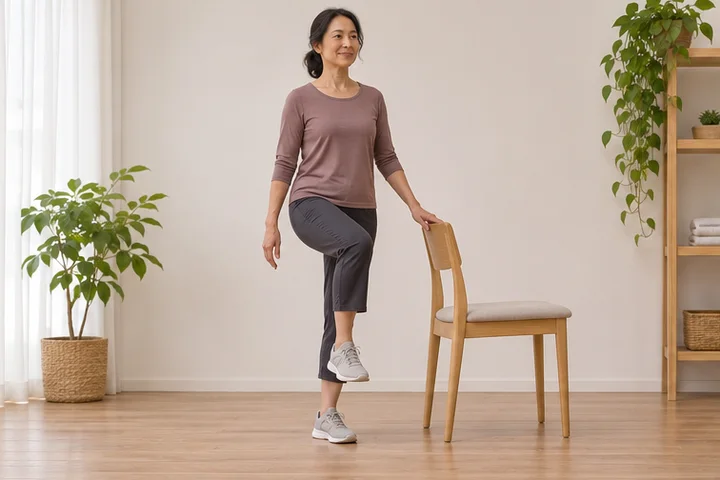
- Support use a firm wall or steady chair
- Range choose a small, comfortable movement
- Space leave room beside you for a step
Standing movement can be practical when getting onto the floor is inconvenient. A wall or a sturdy chair gives you a stable reference. The examples below are general movement options for adults. If you have a recent injury, pain or difficulty with balance, ask what is suitable for you.
Seven movements to recognise
| Movement | What it looks like | Make it easier |
|---|---|---|
| Side steps | Take a small step sideways and bring the other foot towards it | Move along a worktop |
| Heel-to-toe stance | Stand with one foot a short distance in front of the other | Increase the space between the feet |
| Heel raise | Hold a support and lift and lower the heels | Use a smaller lift |
| Mini squat | Bend the knees slightly and let the hips move back | Hold a chair back |
| Side leg lift | With support, move one leg a little to the side | Keep the toes close to the floor |
| Wall press-up | Bend the elbows so the body moves towards the wall | Stand closer to the wall |
| Supported knee lift | Hold a support and lift one bent knee slightly | Lift just enough to clear the floor |
These examples use the legs and shoulders and change the demands on balance. They provide variety during the day. A programme for a back condition depends on the diagnosis and advice you receive.
Set up the space
Check that the chair is steady and that the floor has enough grip and clear space. If a movement increases pain or brings on dizziness or unsteadiness, stop and ask for advice. At work, sometimes simply changing position or taking a short walk is easier to fit in.
See posture and back pain and gentle neck movements.
Sources
- Beginner yoga at home: choosing your first poses
Try mountain pose at home, choose between a chair and a mat, and learn what to look for in a beginner yoga class before you press play. - Chair yoga for beginners: three poses you can try seated
Set up a stable chair and explore seated mountain, a small seated cat movement and a side bend, with ways to adjust the range. - Downward-facing dog: how to try a supported chair variation
How downward dog works, how a higher hand support changes the pose, and what to consider if your wrists hurt or you have glaucoma. - Tree pose for beginners: finding balance beside a wall
Where to place your foot in tree pose, how to use a wall, and how to come out of the pose if you start to wobble. - Yoga breathing for beginners: a gentle introduction to pranayama
Try a quiet seated breath. Learn how alternate-nostril breathing, humming and breath retention differ, and when to pause a yoga breathing exercise. - Yoga headstand: what research says about neck load and eye pressure
How much weight reaches the head in Sirsasana, what researchers measured in the eyes, and how beginners can explore balance while standing.