Orthopedics · Insoles
Heel Spurs and Heel Pain
This article is for general information and does not replace advice from a doctor. Medical disclaimer
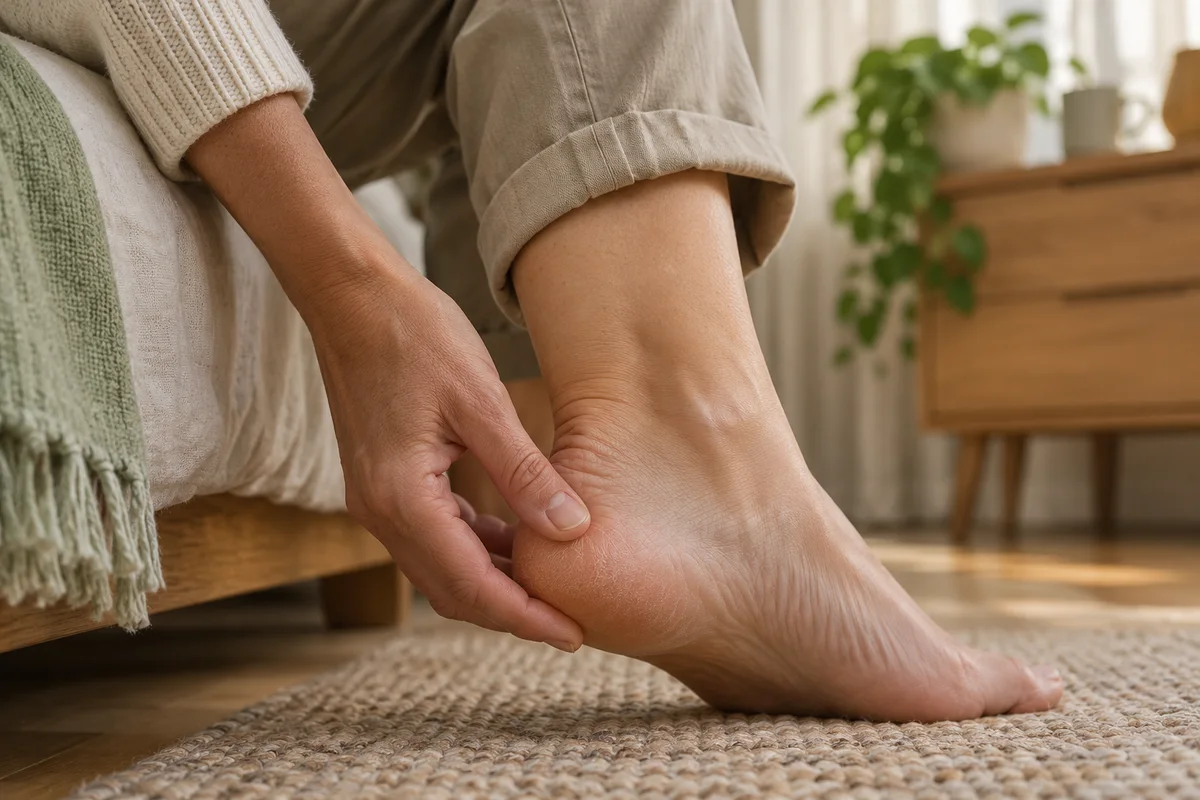
A heel spur A bony outgrowth from the heel bone that can be seen on an X-ray. is a bony growth on the heel bone that shows up on an X-ray. It can be present for years without symptoms. If your heel hurts most with your first steps out of bed, one possible cause is plantar fasciitis A painful condition of the plantar fascia, often felt most strongly on the first steps after resting. , a painful condition affecting the tissue that supports the arch.
What the pain pattern can tell you
Where and when the heel hurts helps guide the exam.
| What you notice | What the clinician may check |
|---|---|
| Pain under the heel on the first steps after sleep or sitting | Where the plantar fascia attaches to the heel bone |
| Deep, bruise-like pain in the center of the heel | The heel’s cushioning fat pad |
| Burning, tingling, or numbness | Possible nerve compression |
| Pain after a sharp increase in activity that gradually starts to occur at rest | Possible stress injury to the heel bone |
| Pain at the back of the heel | The Achilles tendon and nearby tissues |
Symptoms can overlap. Tell the clinician if you recently increased your running mileage or spent more time on your feet at work. Point to the spot where it hurts most.
What an X-ray can show
An X-ray shows the bone and can reveal a spur. A clinician checks the tenderness of the plantar fascia during the exam. Other imaging can help if there is a reason to look more closely at the soft tissues. The finding on the X-ray makes sense in the context of the symptoms and the area of greatest tenderness.
Plantar fasciitis pain can improve while the spur remains visible. If a clinician suggests foot support, see what to expect from insoles for plantar fasciitis.
When to get help
Make an appointment if the pain persists, worsens, or changes how you walk. Seek prompt in-person care after an injury if the pain is severe or you cannot put weight on the foot. Tell your clinician if pain started after an increase in activity and now occurs at rest. An early X-ray can miss a stress fracture.
Frequently asked questions
Can you have a heel spur without pain?
Yes. Heel spurs can be incidental findings on X-rays. If your heel hurts, a clinician uses the exam to work out which tissue may be causing the pain.
Does heel pain always need an X-ray?
A history and exam are often enough when symptoms fit plantar fasciitis. A clinician may order imaging if they suspect a fracture or another cause.
Sources
- Plantar Fasciitis and Bone Spurs. American Academy of Orthopaedic Surgeons
- Heel Pain: Diagnosis and Management. American Family Physician, 2025
- Flat Feet in Adults and When to Get an Exam
How clinicians assess a newly fallen arch in adults and when shoe inserts or an ankle-foot brace might help. - Custom vs prefabricated insoles: how to compare
Compare fitting, adjustments and total cost. See what research found when custom and prefabricated foot orthoses were compared for heel pain. - How to choose orthotic insoles: fit and types
Compare cushioning inserts, prefabricated orthoses and custom devices. Learn what to check inside your shoes and what to ask at a fitting. - Orthotic insoles and shoes: how to check the fit
Check heel depth, toe space and insole movement before altering an orthosis. Learn what to bring to a fitting or follow-up. - Insoles for Plantar Fasciitis: What the Evidence Shows
In trials, insoles alone did little for plantar fasciitis pain. Guidelines favor stretching, taping and night splints, with insoles only as an add-on. - Beginner yoga at home: choosing your first poses
Try mountain pose at home, choose between a chair and a mat, and learn what to look for in a beginner yoga class before you press play.