Orthoptics · Strabismus
Exotropia in Children and What an Eye Exam Can Show
This article is for general information and does not replace advice from a doctor. Medical disclaimer
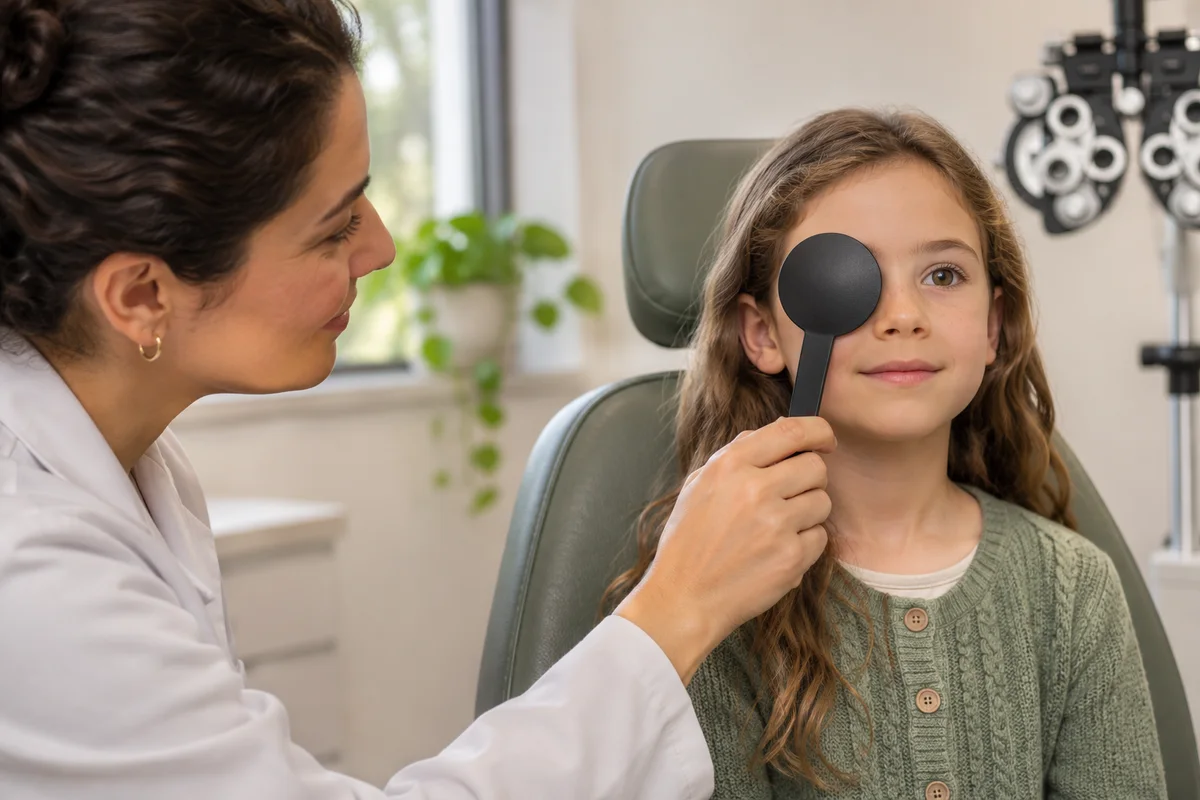
With exotropia A type of strabismus in which one eye turns outward, away from the nose. , one eye turns outward toward the temple. When it happens only some of the time, it is called intermittent exotropia. You may notice it when your child looks across a room, is tired or ill, or loses focus. Some children close one eye in bright sunlight.
What to note before the appointment
Note what your child was doing when the eye turned, how often it happens, how long it lasts, and whether it is always the same eye. A short video can help if the eyes are aligned during the exam. Ask about double vision or tired eyes. Some children notice little even when the turn is easy for someone else to see.
Get urgent care if the turn appears suddenly, especially with double vision. For recurring episodes, schedule an exam with a pediatric ophthalmologist.
What the eye specialist checks
The exam checks visual acuity in each eye, whether glasses are needed, the size of the turn at near and at distance, and how easily the child realigns their eyes. As part of assessing binocular vision The use of both eyes together to combine their images into a single view. , the clinician may measure stereopsis, the ability to judge depth using both eyes together. They also look for amblyopia Reduced vision in one eye that develops in childhood because the brain favors the other eye. Often called lazy eye. or another reason why one eye sees less well.
When treatment is discussed
Some children with good control of an intermittent turn can be monitored. In a Pediatric Eye Disease Investigator Group study of children ages 3 to 10 who did not need immediate surgery, lasting worsening of alignment or stereopsis was uncommon at the three-year visit. In a separate group of children ages 12 to 35 months, the estimated chance of meeting the study’s criterion for a constant outward turn was about 10% over three years. The studies described different groups and used different outcome criteria.
If the turn becomes more frequent, double vision becomes bothersome, or stereopsis worsens, the ophthalmologist reassesses the plan. Depending on the exam, the options may include glasses, treatment for associated amblyopia, or a discussion about strabismus surgery.
Frequently asked questions
Does closing one eye in the sun mean my child has exotropia?
It can occur with intermittent exotropia. A pediatric eye exam can check alignment and other possible causes, especially if an eye also turns outward at other times.
Does exotropia always require surgery?
Some children with an intermittent eye turn can be monitored. The decision depends on how well they control the turn, their symptoms, and how well the eyes work together.
Sources
- Exotropia. American Association for Pediatric Ophthalmology and Strabismus
- Three-Year Observation of Children 3 to 10 Years of Age with Untreated Intermittent Exotropia. Ophthalmology, 2019
- Three-year observation of children 12 to 35 months old with untreated intermittent exotropia. Ophthalmic and Physiological Optics, 2020
- Accommodative Esotropia: Why Farsighted Children's Eyes Cross
Accommodative esotropia links eye crossing to farsightedness. Glasses are the main treatment; some children need bifocals, and a minority need surgery. - Strabismus Surgery: What Happens, Risks and Repeat Operations
Eye muscle surgery loosens or tightens muscles, usually as a day procedure. In a US registry, about 1 in 15 patients had a second operation within a year. - Types of Strabismus: Eyes That Turn In, Out, Up or Down
Esotropia, exotropia and vertical eye turns, constant or intermittent: how the main types differ, what pseudostrabismus is and which signs need prompt care. - Amblyopia in Adults and What Treatment Studies Show
How an exam distinguishes childhood amblyopia from a new change in vision, and what research on adult visual training has found. - Double Vision and When It Needs Urgent Care
How clinicians tell monocular from binocular double vision, which symptoms need urgent evaluation, and what to report at an exam. - Nystagmus in Children and When to Seek Urgent Care
How involuntary eye movements can look in a child, what to report at an eye exam, and when to seek urgent care.