Orthoptics · Eye checks
Nystagmus in Children and When to Seek Urgent Care
This article is for general information and does not replace advice from a doctor. Medical disclaimer
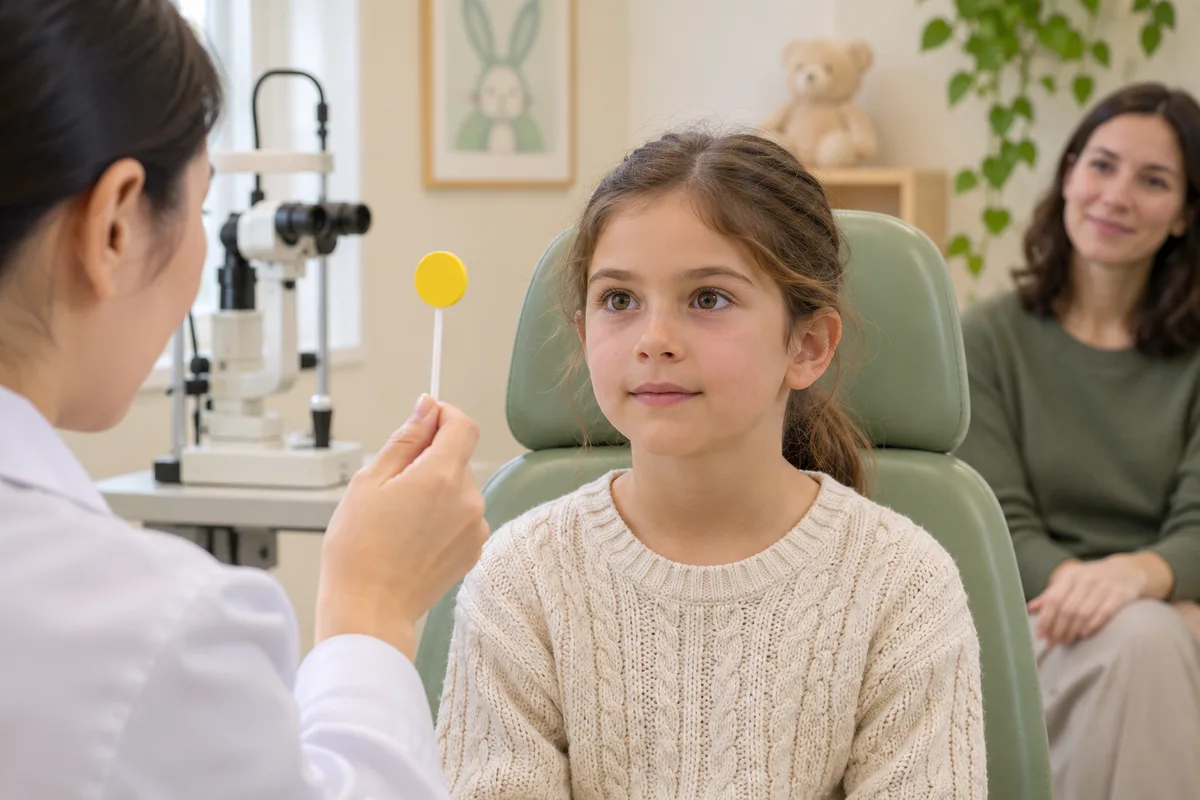
Nystagmus is a repeated, involuntary movement of the eyes. It can become noticeable in infancy or develop later. A child with these movements should have a pediatric eye exam. Seek emergency assessment if they begin suddenly in a child older than six months or occur with a new problem with balance or coordination.
What a parent might notice
The eyes may move side to side, up and down, or in a rotating pattern. Some children turn or tilt their head because the movement is less pronounced in a certain direction of gaze. Children with early-onset nystagmus may see the world as stable. A child who develops it later may say that objects seem to move.
Tell the clinician the age at onset, what the movements look like, and whether they change when the child looks to one side or focuses on something close. Include relevant medicines and other developmental or health concerns.
What the eye specialist checks
The specialist checks vision and refraction in each eye, head posture, eye movements, and the back of the eye. Depending on the findings and the age at onset, additional tests might examine retinal function, investigate a genetic cause, or assess the nervous system.
Care depends on the cause and how well the child sees. Glasses or support for visual tasks at school may be discussed. See vision screening and eye exams for children.
Frequently asked questions
Why might my child turn their head to look?
Some forms of nystagmus are less noticeable when the eyes look in a particular direction. A pediatric eye specialist can assess this at the exam.
What should I bring if the movements come and go?
A short video can help if you can take one without delaying care. Note when the movements began, when they are most noticeable, and whether other symptoms are present.
Sources
- Nystagmus. American Association for Pediatric Ophthalmology and Strabismus
- The clinical evaluation of infantile nystagmus: What to do first and why. Ophthalmic Genetics, 2017
- Nystagmus. NSW Health
- Double Vision and When It Needs Urgent Care
How clinicians tell monocular from binocular double vision, which symptoms need urgent evaluation, and what to report at an exam. - Vision Screening for Children: What US Guidelines Recommend
USPSTF advises vision screening at least once between ages 3 and 5; AAP and AAO add checks from birth. What screening finds, its limits and when to refer. - What Does an Orthoptist Do? Training, Tests and Who They See
Orthoptists assess and treat eye alignment, eye movement and two-eye vision problems such as amblyopia, strabismus and double vision, working with eye doctors. - Amblyopia in Adults and What Treatment Studies Show
How an exam distinguishes childhood amblyopia from a new change in vision, and what research on adult visual training has found. - Exotropia in Children and What an Eye Exam Can Show
How to recognize an outward eye turn in children, what an eye specialist checks, and when to discuss treatment. - Accommodative Esotropia: Why Farsighted Children's Eyes Cross
Accommodative esotropia links eye crossing to farsightedness. Glasses are the main treatment; some children need bifocals, and a minority need surgery.