Orthoptics · Eye checks
What Does an Orthoptist Do? Training, Tests and Who They See
This article is for general information and does not replace advice from a doctor. Medical disclaimer
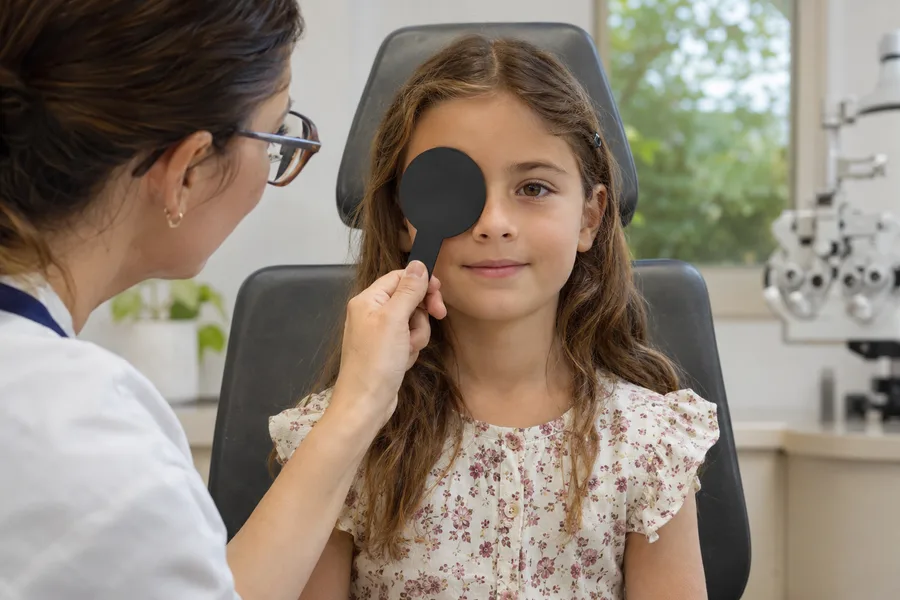
An orthoptist is an eye care professional who assesses and treats problems with eye movement and with how the two eyes work together. Typical patients are children with lazy eye or an eye turn and adults with double vision. In the US, certified orthoptists work as part of a team with the patient’s ophthalmologist.
What orthoptists treat
The American Association for Pediatric Ophthalmology and Strabismus (AAPOS) lists the main conditions orthoptists help with:
- lazy eye, or amblyopia Reduced vision in one eye that develops in childhood because the brain favors the other eye. Often called lazy eye. , where one eye does not see as well as the other, even with glasses
- strabismus, or misaligned eyes
- diplopia, or double vision
- other eye movement problems
Their tools include prism glasses, patching the stronger eye to make the weaker one work, eye exercises and specialized equipment that helps the eyes work together. AAPOS notes that well-coordinated eyes make reading, sports and driving easier.
In the UK, the NHS Wales careers profile describes orthoptists as specialists in assessing visual function who work especially with children, and lists extended roles in stroke and brain injury, neurological conditions, visual processing disorders, low vision, glaucoma and special educational needs.
Training and where orthoptists work
In the US, AAPOS describes the path as a college degree followed by two years of specialized training and a certification exam with the American Orthoptic Council. Orthoptists can see patients on their own, but they work with the patient’s eye doctor and talk with them about the care they recommend.
In the UK, orthoptists are allied health professionals registered with the Health and Care Professions Council. Many work in hospitals as part of a wider team, and some work in educational or social care teams in the community.
How orthoptists fit into the eye care team
People often confuse the professions that look after eyes. AAPOS describes them this way:
| Profession | Who they are | Main work |
|---|---|---|
| Ophthalmologist | Medical doctor (MD or DO), the eye doctor | Treats all kinds of eye problems and does eye surgery |
| Optometrist | Not a medical doctor, but studies eyes for many years | Checks how well you see, gives glasses or contact lenses, spots some eye problems and can give some eye medicines |
| Optician | Glasses maker | Helps choose glasses or contact lenses and makes sure glasses fit; does not check eyes or give medicine |
| Orthoptist | College degree, two years of special training, American Orthoptic Council exam | Eye movement and two-eye vision problems; works on a team with an ophthalmologist |
Orthoptists work alongside the eye doctor. Of these professions, AAPOS lists eye surgery only for the ophthalmologist.
What happens at an eye exam
Tests depend on the child’s age and how well they can cooperate. The AAO guideline on pediatric eye evaluations lists what a full eye exam for a child includes, and notes that parts of the exam may be delegated to trained staff working under the ophthalmologist’s supervision:
- the history, including birth weight, gestational age, past eye treatment, current medicines and any family history of eye conditions
- depth perception (stereo) testing, done before either eye is covered so the result is not disturbed
- vision in each eye, using symbols or letters suited to the child’s age, or watching how a baby fixes on and follows a target
- eye alignment and eye movements, checked before any dilating drops
- the red reflex, pupils and the outside of the eyes
Two simple alignment checks also appear in the screening table of the same AAO guideline. In the corneal light reflex test, the examiner looks at where a light reflects on each eye. In the cover test, one eye is covered while the examiner watches whether the uncovered eye moves to pick up the target; a refixation movement suggests a misalignment.
For focusing and convergence problems, AAPOS says an ophthalmologist, optometrist or orthoptist measures the near point of convergence (the closest point at which the eyes can stay together without double vision), tests how well the eyes converge using prisms and measures any outward drift with prisms.
The full exam also includes cycloplegic refraction, in which drops relax the eye’s focusing so the prescription can be measured accurately, and an examination of the back of the eye.
When you might see an orthoptist
Children who fail a vision screening, or who have an eye that turns in, out, up or down, are referred for a full eye exam, and an orthoptist may be part of the team that sees them. You can read about the different kinds of eye turn in types of strabismus.
Children being treated for amblyopia have repeat visits to recheck vision and adjust the plan; patching for amblyopia explains what that treatment involves. Older children and adults with eye strain, blur or double vision when reading may be assessed for convergence insufficiency.
Adults are seen too. AAPOS warns that a misalignment that starts suddenly in an adult almost always causes double vision and is a warning sign that a doctor should check, sometimes with blood tests or an MRI scan. New double vision or a sudden eye turn calls for a prompt medical check.
For more on eye alignment and binocular vision, go back to the orthoptics section.
Frequently asked questions
Is an orthoptist a doctor?
No. In the US a certified orthoptist has a college degree, two years of specialized training and a certification exam with the American Orthoptic Council. Orthoptists work as part of a team with an ophthalmologist, who is a medical doctor.
Do orthoptists only see children?
No. AAPOS says orthoptists help both children and adults with eye movement and vision problems such as double vision. In the UK, some orthoptists take on extended roles in stroke and brain injury.
Can an orthoptist suggest a patch or exercises?
Yes. AAPOS says orthoptists may suggest prism glasses or patching, teach eye exercises and use special equipment, and that they always discuss the care they suggest with the patient's ophthalmologist.
Sources
- Orthoptist/Orthoptics. American Association for Pediatric Ophthalmology and Strabismus, 2025
- Difference between an Ophthalmologist, Optometrist and Optician. American Association for Pediatric Ophthalmology and Strabismus, 2024
- Orthoptist Careers Profile. Health Education and Improvement Wales (NHS Wales)
- Pediatric Eye Evaluations Preferred Practice Pattern. Ophthalmology (American Academy of Ophthalmology), 2023
- Convergence Insufficiency. American Association for Pediatric Ophthalmology and Strabismus, 2023
- Adult Strabismus (Adult Eye Misalignment). American Association for Pediatric Ophthalmology and Strabismus
- Vision Screening for Children: What US Guidelines Recommend
USPSTF advises vision screening at least once between ages 3 and 5; AAP and AAO add checks from birth. What screening finds, its limits and when to refer. - Accommodative Esotropia: Why Farsighted Children's Eyes Cross
Accommodative esotropia links eye crossing to farsightedness. Glasses are the main treatment; some children need bifocals, and a minority need surgery. - Atropine Eye Drops for Amblyopia: What the Research Shows
In PEDIG trials, atropine drops in the stronger eye improved amblyopia about as much as patching, including weekend use. Side effects and who it may suit. - Binocular and Digital Amblyopia Treatment: What the Trials Show
Dichoptic games and videos for lazy eye: an iPad game fell short of patching, while two FDA-authorized devices showed gains over 12 to 16 weeks. - Convergence Insufficiency: Symptoms and What the CITT Trials Found
Convergence insufficiency causes eye strain and double vision up close. In trials, office-based therapy beat home push-ups but not placebo for reading scores. - Patching for Amblyopia: What Trials Show About Glasses and Hours
Glasses come first. In PEDIG trials, 2 hours of daily patching matched 6 for moderate amblyopia, and 6 matched full-time patching for severe amblyopia.